Posts

Making Your Board Meeting Agenda More Strategic

Boards can keep their focus on strategy sometimes by tweaking small things like the board meeting agenda. Prioritizing strategic discussion early in the board meeting forces this focus, downplays the operational to the benefit of all involved.

By Kevin Smith

Prompt: An unorthodox board meeting room. From Leonardo.AI

I’ve seen a lot of credit union board meeting agendas. They’re not identical, but they do tend to be pretty similar. It’s pretty common for the consent agenda to be the first item. This can feel like a big  of something accomplished right away – with a whole lot of bullet points underneath! It feels like momentum gathering, right? Now, don’t get me wrong. I’m not knocking the consent agenda. You absolutely should be using it. And if you aren’t go here and explore what it is. It’s fabulous. But I’m going to throw a bit of a wrinkle here and suggest that it shouldn’t be the first item on your board agenda.

Listen to Tim

This concept comes from my partner, the inimitable Tim Harrington. He and I have been spreading this idea whenever possible, and that is to make sure that strategic discussion is the first item on your board agenda. Prioritize it!

Prioritize

Prompt: An unorthodox board of directors meeting room designed by Pablo Picasso. From Leonardo.AI

What often happens is that we like to get a bunch “must do” items checked off of our agenda and out of the way so that we can get to the “big” stuff. Then, inevitably, these perfunctory, “must do” items bring up questions that need answers, and side tracks, and rabbit holes. The next thing you know, you’re at the end of the scheduled time and there’s nothing left for the juicy strategic discussions. Either you’re out of time or out of gas for the most important stuff. And let’s be honest – many of those “must do” check marks lead you into operational weeds, don’t they? (I know within reason that they do because I work with a lot of boards and I hear about it constantly.)

Tim told me about one of his clients that made this simple change to the agenda and the fabulous results that they got. They told him of their inevitable decline into operations with the first couple of items in their agenda and the constant short shrift that strategy got, OR, how very lonnnnggg their meetings became. By putting strategy first, they got to the good discussion, but then were able to “fit in” the rest of the items without devolving into the weeds. It’s efficient in so many ways. They were amazed at how different the tone of the meetings was, and how much better.

No Copy And Paste

Prompt: An unorthodox board of directors meeting room designed by Henri Matisse. From Leonardo.AI

Many of you may be using ctr+C and ctr+V for your agendas and have for a very long time. I challenge you to shake things up a bit. Try something new. Spend more time on the most important element of your job as a director. It’s amazing how some minor adjustments to the nuts and bolts of the job can have such a profound impact on the work you do. It’s important to look carefully and regularly ask, “why do we do it this way?”

Now … don’t get me started on the shape of the table in the board room and who sits where …. A discussion for another time.

About the Images

Naturally, I’m jumping on the AI bandwagon like everyone else. (I’m here to learn.) And since my blog topic was about shaking things up a bit I wanted to see what Leonardo.AI would spit out for me. 

The first image prompt was “an unorthodox board meeting room.” And what you see is pretty M’eh, in my opinion. Yes, it’s got a few out of the ordinary items in there, like the stuffed owl. But otherwise it looks pretty recognizable. The table shape is as predictable as it gets!

The second image prompt was “an unorthodox board meeting room designed by Pablo Picasso.” Now we have some great things to look at but otherwise, it’s still a predictable board room. It looks like the board room for the Picasso Foundation. Booorrrring!!

The third image prompt was “an unorthodox board meeting room designed by Henri Matisse. Now we’re getting somewhere! It’s my favorite, but then again Matisse is my favorite as well. At least the word “unorthodox” carries some weight here. 

Honestly, all three were disappointing. We’re learning that AI has some interesting things to show us, but there are certainly limitations. Maybe I need to work on my prompts? Human creativity is far superior. (But what will these look like in a few years?) 

10 1/2 Team Building Options for the Board

Like any other team, the credit union board of directors must make intentional efforts to develop and work well together. Too many boards ignore this outright or give it lip service. We can be creative in approaches to work better as a group and as individuals.

By Kevin Smith

It’s a given that organizations, corporate or nonprofit or other, should take steps towards developing its teams from groups of disparate individuals to partners who trust each other, support each other and work interdependently. However (comma) I rarely see it happening among boards. That should change. If you’ve seen me speak or read many of the TEAM Resources blog posts, this will be familiar turf. My stock line is, “we (as boards) get together for 1 ½ to 2 hours a month, and expect to perform like the Navy Seals. It ain’t gonna happen.” So, this month we’re going to talk about practical options and examples that you will enjoy. And this list is going to fall short. Some of you are going to have great ideas that I’m missing. We need to hear them! Share please. We’re credit union people. It’s what we do.

Of course, I can’t help but share with you here my favorite team building picture as a cautionary tale of what NOT to do. Please. No public shaming as team building. :-)

What Counts as Team Building

When I harp on this topic, sometimes boards tell me how they have dinner together after board meetings, go to golf outings together, or go to conferences as a group and spend time together in the evenings. These things certainly have value in helping individuals to get to know each other better, and that’s not a bad thing. But it falls short of development. Team building is best when it’s the full group and there is intentional activity meant to help people to function better together.

Now we’ve all seen funny (or horrifying) stories about team building gone wrong, with trust falls, ropes courses, etc. I’ve been through a few cringe-worthy sessions myself. Not all of the options fit all of the people. It’s probably apparent that scavenger hunts and building towers out of straw, tape and string are not my things. But some people love them. My preference is for activities that tie into our work as a board and our individual styles to make them gel.

An Incomplete List of Options

Personality/Working Style Assessments

The Workplace Big Five is my favorite of these. (I’m certified to present this. That’s your only sales pitch.) Disc is a favorite of many that I know. I have a total bias against Myers-Briggs based on the (lack of) science behind it.

[A board I was working with had a total breakthrough with the Big Five as we talked about their group having one “challenger,” with the rest going with the flow. They were pretty happy that they had her as the pushback, but she spoke up about the weight that she felt being the only one to do it. They found a way to let her off the hook at times. Changed the whole board dynamic!]

Field Trips

I did know ONE board who did great, intentional team development. They took field trips to civil war battlefields. They spent some time with tours and lessons and then did a leadership debrief. Fabulous!

Volunteer Work

This option is certainly valuable to the community and feels good. But to make sure that it fits the bill of team development, make sure that it has a leadership debrief element.

Hunt for Local “Outstanding” Organizations

This is great when it’s withing your community. Take the time to understand the organization, and examine what makes it great. Discuss how the leadership got them there and what you can take back to the credit union. (This is similar to Simon Sinek’s version of a worthy rival.) The debrief is essential.

Corporate Tours

Breweries and distilleries are always a hit. Also consider candy makers, or bakeries, or companies that do something very interesting. Look for their purpose, core values (or lack thereof) and discuss how those play out in their work.

Review of Regional Award Winners

When local companies or groups show up on a “best” list, pick some to analyze and share the lessons. (The fun flip side to this is to do a post-mortem of a corporate failure.)

Tours in D.C.

Of course, the board should be going to GAC in D.C. I know it’s a busy week, but consider taking a tour together as a board and unravelling what you learn. (I highly recommend the spy museum)

Yes. I can count. No. There aren’t 10 ½. I am counting on you fine readers to add to this so we have more than 10. (See what I did there? *counting*)

Do something creative.

          Do something interesting.

                    Do something intentional.

                              Do something.

Radical Candor in the Boardroom

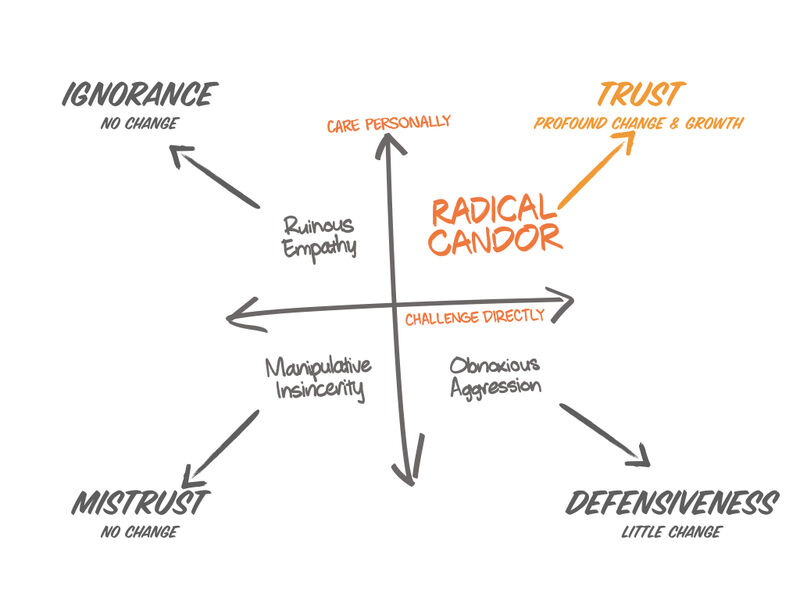
To promote high performing teams, approaches like radical candor can be of great value. The concept of challenging directly but caring personally creates a better environment. Boards of directors should make concerted efforts to establish honest and trusting environments. Used thoughtfully radical candor can inspire change and growth.

By Kevin Smith

Recently, I ran across the concept of “Radical Candor” from Kim Scott, while preparing a session I was presenting at a conference. The terms itself, Radical Candor, feels much edgier and biting than what I had been looking at and it drew my curiosity. Naturally, everything I dig into quickly gets reframed as to how it relates to credit union boards of directors. This was no different. But here it wasn’t a perfect fit, though there is serious merit in how this concept could (should) get traction with boards.

The Source

Author Kim Scott has quite a professional pedigree, having been part of AdSense, YouTube and DoubleClick teams at Google, as well as a CEO coach at Dropbox, Qualtrics, and Twitter among others. She’s been a manager, a boss and a leader in a lot of different scenarios. She’s very candid about how she learned, the mistakes she made and how she developed the concept of radical candor and wrote the book.

The Concept

The concept is fairly simple and it uses a 2×2 which is the rule for card carrying consultants. :-) The x axis is the degree to which you challenge your employees directly. The y axis shows the degree to which you care personally. (See graphic and cover.) That’s really it. As she puts it, “You don’t have to choose between being a pushover and a jerk…you can be kind and clear at the same time.” The key to this approach is to be direct with people, but to “give a damn” about them and make it clear that you support them. It’s really simple. Of course, the implementation of this opens a variety of cans of worms, because, after all, we are human beings that are complex, nuanced … and emotional.

The Goals

The book is absolutely geared to making people better “bosses.” So how does this relate to boards of directors who operate distinctly outside of a corporate hierarchy by being peers in the boardroom? Scott indicates that the three core responsibilities of bosses are to:

  1. Create a culture of compassionate candor
  2. Build a cohesive team
  3. Achieve results collaboratively

These are goals for the board as well.

The Need

My experience with boards of directors around the United States suggests that we could use a lot more radical candor (compassionate candor) in the boardroom. This is hard enough for bosses to achieve with their direct reports and the board setting has further challenges. As groups of directors, it’s critical that we address issues, failures and lack of performance from colleagues on the board. This doesn’t happen nearly enough and many boards “tolerate” certain director who don’t live up to the needs of the organization. Of course, this candor has to be accompanied by deep personal care for each other and the support that this requires.

Now, I’m giving very short shrift to Scott’s concept here, providing only a thumbnail sketch of everything involved. I encourage you to read the book, explore some articles or videos on the concept and see what you think. She provides a very detailed approach and order of operations for executing this along with great examples of the process.

How to Adapt

Unfortunately, this isn’t a hand and glove fit for boards, as we don’t have bosses. And I haven’t worked through all of the nuance that Scott does. But I want you to consider how this might be a value for a peer group like your board. There’s significant value here. Don’t you think?

Here’s a suggestion from Scott as to how to start building this culture:

  1. Be the first to solicit criticism from your peers.
  2. Gauge the conversations as you give criticism: If your listener is upset, ratchet up the care personally side of things. If they are not hearing you, challenge more directly.
  3. Encourage all candor and discussions.

We owe it to each other and to the credit unions to which we pledge an oath of office to work at the highest level possible.

I want to hear your thoughts.


Board Packet Purge

Good governance and strategic vision are influenced by the materials that the board sees and hears. It’s important to periodically take stock of those materials to make sure they are not only  aligned with strategic goals, but that they also useful. Boards are often resistant to the board packet purge, opting to add materials, but never reduce.

By Kevin Smith

How many pages is your board packet? Seriously. Go check. How much does that vary month to month? And how many times have you gotten that packet before a board meeting and let out a bit of a *sigh* as you get ready to review it? Be honest. I remember doing it when I was on a supervisory committee. It can be a daunting task. At least we no longer live in the age of paper board packets that take three days for your staff to photocopy and then send out via FedEx. (Please tell me you don’t have paper packets still! If you do, email me privately. We’re going to chat.)

There are very few credit union jokes, but the one that I know is this: “What is the most terrifying sound to a credit union CEO? Answer: The sound of a board packet being opened at the beginning of a board meeting.” :-) 

In some ways the digital board packet can make things worse, because it is so much easier to add reports, data, detritus and links to spreadsheets in the digital realm. This just adds to the volume. Consider how much time the board spends as individuals reviewing dozens (and dozens) of pages each month. You want this to be valuable time.

Take Stock

It’s time to go through the packet and take stock of what’s in there, determine if/how it connects to the strategic plan, and figure out how to winnow things down to what’s necessary and useful. I’m not suggesting that the goal of this exercise is to get the packet as small as possible. The goal is to make it as useful as possible.

What we often hear when advising boards about this process is that they discover a couple or ten reports that are in the packet every month, and always have been, that no one currently on the board knows why they’re there. Often it was something that a former board member asked for years ago that got added, and there it remains. New board members join and absorb the culture of the board and its packet, and presume this is something that they need to know and understand. They simple accept it as part of the status quo. It might be something that was tied to a strategy approach that is long gone. But there it remains. If the board can purge even a couple of items like this, it is moving towards greater efficiency.

Ties to Strategy

The goal of the packet is to inform the board about how the credit union is moving towards its strategic goals and to provide relevant context. Make sure every item has a direct connection at the appropriate level of detail. This level of detail should also evolve, depending on where you are in the process. For example, a brand-new branching strategy will require more detail at the beginning and you will trim it after some time and progress. Avoid having items that are locked in place once they are added. The packet should evolve, expand and contract regularly. It is not static.

Reigning in the Directors

One approach to the packet is to make sure that any potential new additions come to the full board for consideration and a vote before adding them. Also, get the CEO’s very honest thoughts on any additions. This should be a written policy. The board then must force itself to think about how the new information will serve to inform the strategic governance of the board and avoid individuals who just want to see things.

No Perfect List

Of course, I know that what you’re looking for from TEAM Resources right now is the perfect list of items to put in the packet. And of course, you know, if you’ve heard me before, my answer is “it depends.” There is no perfect list. You need to customize this to your credit union, to your strategic plan and to the culture of your board. That doesn’t mean that you shouldn’t take on this project in the effort towards efficiency.

Dashboards

The visual representation of data is your absolute friend here. It’s so much easier and more efficient to have your information in dashboards that show you trends and targets. My snarky response is that I want to be able to take off my trifocals and be able to tell whether the trends are on target or heading astray. If they’re on target, I don’t ask any more questions.

The Arguments

There are a couple of common arguments about slimming down the board packet. One is that the board has a fiduciary duty to oversee what’s happening in the organization and that involves examining the individual numbers. I agree about the fiduciary duty. But once you learn where the numbers are coming from and that you can trust them, then the dashboard is sufficient and efficient. This also helps keep directors from getting too far into the weeds. (I’d also suggest that the auditors are far better at this kind of work than your average director.)

Another argument is that the board should have access to any and all data in an effort towards transparency, so that the CEO or staff aren’t “hiding” something. This is reasonable and it’s easy to link to the deeper data for an occasional review outside of the norm. This is also often where new directors learn the ropes of the financial. Learn it well enough and quickly enough to know what you can ignore. And consider that it is also possible to “hide” things by burying the board in date.

Not a “One and Done”

Over the years, Tim and I have encouraged this process and have seen some success. Remember, this is about efficiency. Make sure your meeting preparations are worthwhile and not mind-numbing reviews of hundreds of pages. So, if you’ve done the packet purge and found efficiencies, don’t presume that you’re done for a generation. Repeat the process every couple of years. The more often you do it the quicker it will be as well.

Strategic Efficiency is the goal. We cannot afford to waste time.

Addressing Underperforming Directors

Ignoring the behaviors and activities of an underperforming director can have dramatic consequences. Yet among a group of peers such as a board of directors too often these scenarios go unaddressed. It may be easier in the short run to avoid dealing with the problem but it rarely gets easier. This is, in fact, a duty of the board.

By Kevin Smith

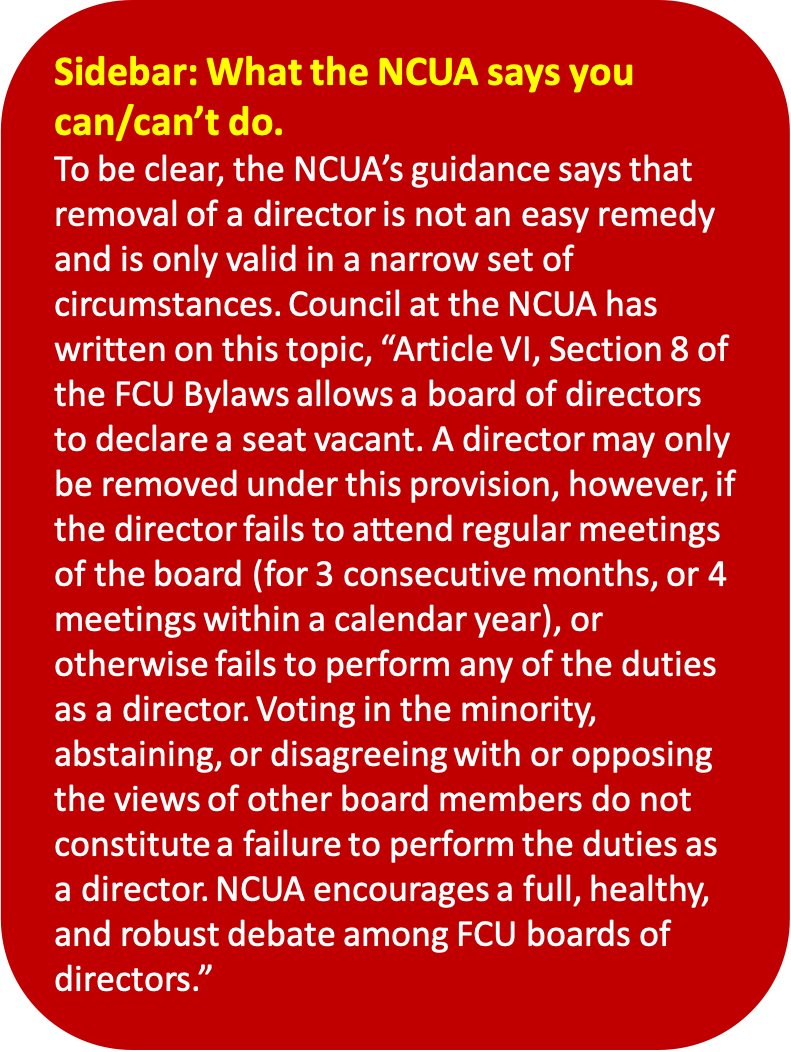
“Sadly, boards are more likely to replace a CEO than oust one of its troublesome board members.” Beverly Behan, Board Consultant

Someone is going to call me out on the fact that I’ve used this quote before. I hope they do. It means someone is paying attention. (See the original post here.) But this one needs further attention because I don’t believe circumstances have changed much, if at all. It’s a doozy of quote too. (Tim and I used it in our book too. It makes a dramatic point!).  

 The first time I used the quote in a blog post was in 2016. In my mind that’s long enough to warrant revisiting. But in that post we were writing about renomination and what directors need to demonstrate to earn renomination to the board ballot.

Today, I’m writing about addressing underperformance and having uncomfortable conversations. This is about confronting issues, rather than ignoring them or simply having hushed discussions in hallways after meetings, where nothing gets resolved.

Common Problematic Behaviors

Click the sidebar to see the full letter.

Here are some of the negative/troubling things that I hear about around the country in my hundreds of conversations with directors, CEOs, senior leaders, as well as with others related to board work.

Directors who:

  • Fall asleep during board meetings
  • Are clearly never prepared
  • Are way, way off topic on a regular basis
  • Have experienced mental decline, age related or otherwise
  • Talk far too much (or far too little)
  • Bully staff and colleagues on the board
  • Don’t do what they agree to do (think of those who have to be chased down for everything and never hit a deadline)
  • Cannot let personal feelings and opinions go when the vote goes against them

I’m sure you can add your own examples. (And please do in the comments below. It helps others to know they’re not alone.) These are the most common ones I hear about. And you can let your imaginations run wild with the damage that these behaviors can cause to the board and the credit union. You may have some actual terrifying anecdotes. Don’t underestimate what’s at stake.

In previous blogs, you’ve read about the TEAM Resources approach to strategic governance via written policy to provide tools for managing these scenarios. But let’s talk about actually getting beyond the discomfort of the circumstances and dealing with humans in a way that doesn’t have to be confrontational or hurtful.

Addressing Behavior

  • First, remember your humanity and empathy. You have to confront the situation but it doesn’t have to be confrontational, negative and accusatory. Consider where this director may be coming from, and what they may be dealing with in their life. Keep the discussion as positive as possible.
  • Always start from an assumption of best intentions. Don’t presume malicious intent unless you have significant evidence of that.
  • Schedule a time to meet with the individual one-on-one. This is never something to address in front of a group.
  • Be specific about the behavior you are witnessing and how it may be coming across. “I noticed at the last board meeting that you didn’t seem engaged with the meeting. Your attention seemed to be somewhere else and you didn’t contribute as much as you have in the past.”
  • Ask about the circumstances and be ready to listen and really hear what is going on. Use active listening techniques.
  • Offer support. “How can I, and we as a board, help you so that you can fully perform your duties? What do you need?” You’ll be surprised how far this will get you, either in the desire for help or in the acknowledgement that the behavior is happening and needs to be addressed.
  • Be clear about what plan is in place and a timeline for making things better. “In the next two board meetings, can you try to make sure that you are not the first person to speak up so that we can make room for other voices? And we can see how that goes.”
  • Refer to your well-written governance policies that address how the board has agreed to work as a group. Remind them that this is what they signed and agreed to and that the current behavior violates the policy. “Part of our governance policy on behavior states, ‘Board members will be properly prepared for Board deliberation. This includes, but is not limited to, reading board packet materials in a timely manner, keeping up with industry trends and issues, ongoing training and education that is specific to the individual needs of each Board member.’ And you are not holding up your end of that requirement.” This approach keeps things formal and professional, and keeps your involvement at a professional and not a personal level.

Often, after taking these steps problem directors will see own up and offer to step down. Handled with compassion this doesn’t need to be a fight or a negative circumstance. Though, I can’t promise that this will always be the case. Humans can be messy. But I do know that this approach is far more effective than accusations and confrontations.

Whose Responsibility Is This?

The easy answer as to who should do this is the board chair. That really is part of the job description for someone who is primus inter pares, first among equals. So, if you’re not up to this kind of discussion you can lean in and realize that it is a skill that can be learned. Or, you may have to step back and recognize that by not taking on this task is dropping the ball for the job in a way that can damage not just the board, but the entire organization. If that’s the case, you might not be the right chair for the job. (Small consolation for some of you who “ended up” as chair, I know.)

But I also want to put it out there that it doesn’t have to be the chair’s job. Anyone on the board can take up this task. Remember, you are equals. And with the right kind of culture and trust, it’s reasonable that we should expect all directors to bear the weight of accountability for the group.  

Courage

What I’ve described requires some intestinal fortitude and won’t always work perfectly. It also provides some guidelines that make this less difficult with opportunities for very positive outcomes. If expectations are clear and agreed upon by the board as a whole, you have a foundation for addressing underperformance. But ignoring the situation can never be an option. There’s too much riding on the board.


As always, please tell me what you’ve tried and what I’m missing. I never claim to be perfect or completely comprehensive.

Strategy Traps

The time to think about strategy is not limited to the fall right before the new year’s budget proposal. Strategy is an all-year discussion. Boards can (should) shift to this kind of thinking with conscious effort. It’s also critical to avoid the all-too-common strategy traps. Be thoughtful in how you differentiate.

By Kevin Smith


Strategic planning discussions?! Now!? In February?!

Ya sure. You betcha. (To quote my Norwegian/Wisconsin in-laws). The snow is falling outside and I’m putting off shoveling with this blog post. So, for some of you, those clues suggest it’s not the time of year to talk about strategic planning. But Tim and I want to push back on that. We want you to be thinking about strategic planning EVERY month. Not just in the fall right before the new budget proposal. So, let’s check in on a few things so that we can keep the strategic planning muscles in shape all year.

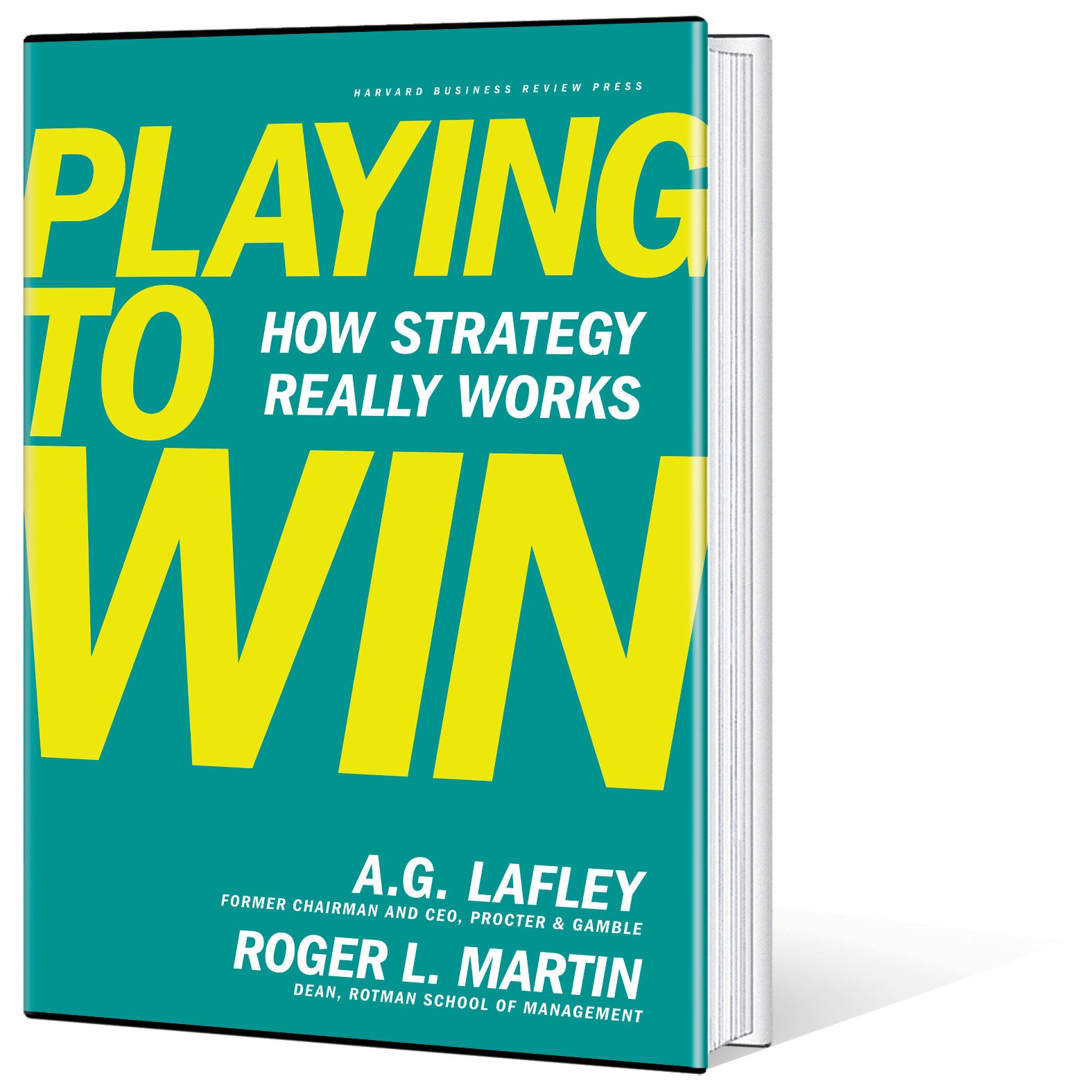
I do a lot of reading on a variety of topics, one of them strategy. And a lot of what I read is often very vague. It’s written to apply to any company, in any industry, of any size. This is how authors sell books, by appealing to a very wide demographic. This can be fine and I typically pull nuggets of value out of anything I read, even if limited. Some of what I read on strategy is clearly geared towards very large corporations. (It may be that their own sales strategy is to focus on MBA students ready to jump into the big time.) Again, all fine and good, but sometimes I don’t see enough value for the credit union industry that we support. But one book that I found valuable is the seminal, Playing to Win: How Strategy Really Works, by Roger Martin and A.G. Lafley. There are a number of great lessons and I recommend the full text, but what stuck with me most is their Six Strategy Traps to Avoid. Let’s review:

Six Strategy Traps to Avoid

  1. The Do-It-All Strategy
    Failing to make choices and making everything a priority.

  1. The Don Quixote Strategy
    Taking on the strongest competitor first. (“Walled Cities.”)

  1. The Waterloo Strategy
    Wars on multiple fronts with multiple competitors.

  1. The Something-For-Everyone Strategy
    Trying to capture all segments at once.

  1. The Dreams-That-Never-Come-True Strategy
    High level aspirations that never get translated into concrete how-to-play and how-to-win choices.

  1. The Program-Of-The-Month Strategy
    Generic industry strategies that all competitors are using.

I’ve seen credit unions that have tried all of these approaches over the years. What I see most commonly are number 1 (The Do-It-All Strategy) and number 4 (The Something-For-Everyone Strategy). And they ARE traps, making organizations feel like they are onto something to pursue when in fact they are just chasing a vague vision. And shockingly, there are a couple of shops out there that were more or less trapped in all six of these at once!

Review and Connect the Dots

Board members – review your strategy documents. Then think about the six traps above. Are you in one of them? Or in danger of falling into one? Do some critical analysis, as strategy documents can become very complex and have the appearance of a differentiation. Make sure that you can articulate your value proposition in plain language, and in a few sentences without too much jargon. If you’re not sure, bring it up in a board meeting, or as a discussion on your board portal software. You may need to start working through this now so that you have all of your strategy ducks in a row by the time the new budget is proposed next November.

And remember – it’s much easier to say “yes” to lines of business to pursue than it is to say “no.” But most credit unions can’t be all things to all people and must become excellent at one thing rather than mediocre at many. Which means that there are things, somewhat profitable angles, that need to be cut off. It’s a difficult decision but an approach that gives much more clarity for making decisions about resources, purpose and priorities.

Tim’s Financials Decoding Manual

And Now for Something Completely Different!

From Kevin Smith and Tim Harrington

You’ve gotten used to the fact that this blog space has consisted mostly of musings about governance from me, Kevin Smith. But this month we’re going to do something completly different. Not too long ago, Tim sent me a document that encompassed many of his cheat codes for understanding credit union financials at the board of director’s level. He wanted to share it with me (since I don’t speak CPA and have to practice) and to see what I thought we could do with it. So we’re going to share it here! It’s a tremendously helpful resource for any credit union director, but it may be just the ticket for newer directors still trying to get their feet under them in terms of reading the financials.

Not only will be post this below for your perusing but at the bottom there will be a link to a downloadable version for you to save and treasure forever. (And maybe you can bring it to the next conference you’re at with Tim and have him autograph it! :lol:)

FINANCIAL DECODING MANUAL.

IMPORTANT FORMULAS


Exercise: Using the Balance Sheet and Income Statement above, you can caluculate the following important ratios. In this exercise, we are NOT using Average Assets, but to keep it simple (and slightly inaccuate), we are using Total Assets: $227,000. To calculate Average Assets, you would need the Total Assets from the previous year end Balance Sheet. To calculate the Average, you simply add the Total Assets from the end of the previous year to the Total Assets from the most recent Balance Sheet, and divide by two.

Yield on Assets

Interest Income from loans and investments / Average assets

$____________ / $227,000 x 100 = ______%


Cost of Funds

Dividends and Interest paid / Average assets

$____________ / $227,000 x 100 = ______%


Net Interest Margin (Spread)

Yield on Assets less Cost of funds

_______% less _______% = ________%


Operating Expense Ratio

Total operating expenses (excluding Provision for Loan & Lease Losses) / Average asset

$___________ / $227,000 = ______%


Provision for Loan and Lease Losses Ratio

PLLL / Average assets

$________ / $227,000 = ______%


Non-Interest Income (NII) Ratio (Fees, Service Charges, etc.)

Total NII / Average assets

$___________ / $27,000 x 100 = _____%


Return on Average Assets (ROA)

Net income / Average assets

$___________ / $227,000 x 100 = _____% 


Your answers (our answers are at the end of this manual)

                                                                               Your Calc.    Nat. Avg. (12/31/22)

Yield on Assets                                                   ______            3.38

Less: Cost of funds                                            ­­______            (0.52)

            Net Interest Margin (Spread)                 ______             2.86

Less:  Operating costs                                       ______            (2.85)

Less: Provision for loan losses                         ­­­­­______            (0.25)     

    Net loss before other income                        ______             (0.24)

 Plus:  Non-Interest Income                                            

            (Fee income, Service Revs, etc.)           ______              1.13  

Equals: Net Profit or Loss                                  ­­­­______              0.92


Some Important Explanations

Capital
Capital can be called Capital, Equity, Net Worth or Reserves.

Formula:  [All Reserves + Undivided Earnings] ¸ Total Assets

Industry Standard:  Depends on amount of RISK at your credit union. Prompt Corrective Action (PCA) considers a credit union with capital of 7% or higher as ‘Well Capitalized’.

How to Improve:
Since profits increase Capital and losses decrease Capital AND this is a ratio of Capital to Assets:

  1. Increase Profits faster than Assets are growing
  2. Decrease Assets and make a Profit
  3. Hold assets steady and make a Profit

Generally, the higher the percentage the better. But too much capital can create some issues


Asset Quality
(aka: Net Interest Margin Analysis)

This is actually two ratios: Delinquency Ratio and Net Charge-Off Ratio

A. Delinquency Ratio

Delinquency Measures:  Quality of Loan Portfolio based on what percentage is currently late by 60 days or more

Formula:  Dollar Amount of Delinquent Loans (60+days) ¸ Total Loans

Industry Standard:  Somewhere in the 0.50% to 1.50% range, depending on strategy. Credit Unions that lend to members of modest means will often have a much higher delinquency ratio than lenders who favor A and B credit rated borrowers.

How to Improve:  Tighten underwriting standards (higher credit scores, Lower debt ratio, more disposable income, etc.); higher risk loans can be discontinued or curtailed; collections can be strengthened.

B. Net Charge-offs Ratio

Measures:  Quality of Loan Portfolio based on the percentage of loans removed from the books (so far this year) as non-performing.

Formula: [Charge offs – Recoveries] ¸ Average Loans (Charge-offs and Recoveries must be annualized)

Industry Standard:  Somewhere in the 0.25% to 0.75% range, depending on strategy. Credit Unions that lend to members of modest means will often have a higher net charge-off ratio than lenders who favor A and B credit rated borrowers.

How to Improve:  Tighten underwriting standards (higher credit scores, higher debt ratio, more disposable income, etc.); higher risk loans can be discontinued or curtailed; collections can be strengthened.


Spread Analysis
(aka: Net Interest Margin Analysis)

Measures: Profitability and how it was attained

Formula:  Each of the key balances on the Income Statement is divided by Average Assets (for simplicity, we used Total Assets in our example instead of Average Assets)

The Spread Analysis is a ratio of key balances on the Income Statement compared to the credit union’s asset size. This allows a comparison between periods and between financial institutions based on their asset size. You can look at the Spread Analysis for any bank or credit union of any size and compare your results with theirs. The tool gives you an apples-to-apples comparison. It is considered a “Common Sizing” tool.

Since credit unions earn most of their revenue from their major assets (Loans and Investments) and their highest expense is often from their major liability (Deposits), measuring the effect of the Income Statement against the size of the Assets makes sense. This is a standard ‘banking’ measure.


Loan to Share Ratio

This is a measuring of lending efficiency. It measures how well a credit union loans out its deposits. Deposits is the main source of funds, and they cost money to borrow from members. Therefore, it is important to utilize the deposits in the most lucrative way possible, that is to loan them out to other members.

Measures: Percentage of deposits (shares) actually loaned out

Formula:  Total Loans ¸ Total Deposits (Shares)

Industry Standard:  The industry average changes with economic conditions but generally runs in the range of 70% to 80%

How to Improve:  Increase loans or decrease deposits.

Loans can be increased by loosening underwriting standards (lower credit scores, lower debt ratio, less disposable income, etc.); make more higher risk loans; market more; add new loan types


Answers to Sample Credit Union Financials

Yield on Assets

Interest Income from loans and investments / Average assets

$12,500 / $227,000 x 100 = 5.51%


Cost of Funds

Dividends and Interest paid / Average assets

$4,200 / $227,000 x 100 = 1.85%


Net Interest Margin (Spread)

Yield on Assets less Cost of funds

5.51% less 1.85% = 3.66%


Operating Expense Ratio

Total operating expenses (excluding Provision for Loan & Lease Losses) / Average assets

$7,800/ $227,000 = 3.44%


Provision for Loan and Lease Losses Ratio

PLLL / Average assets

$1,000 / $227,000 = 0.44%


Non-Interest Income (NII) Ratio (Fees, Service Charges, etc.)

Total NII / Average assets

$1,900 / $27,000 x 100 = 0.84%


Return on Average Assets (ROA)

Net income / Average assets

$1,400/ $227,000 x 100 = 0.62%


In a Spread Analysis Format

                                                                                 Your Calc.    Nat. Avg.

12/31/22

Yield on Assets                                                           5.51               3.38

Less: Cost of funds                                                  ­­­­   1.85             (0.52)

            Net Interest Margin (Spread)                          3.66              2.86

Less:  Operating costs                                          ­­­     (3.44)           (2.85)

Less: Provision for loan losses                                 ­­­­­  (0.44)            (0.25)     

    Net loss before other income                                  (0.22)           (0.24)

Plus:   Non-Interest Income                                   

            (Fee income, Service Revs, etc.)                       0.84               1.13  

Equals: Net Profit or Loss                          ­­­­­­                     0.62               0.92


If you’d like a downloadable version of this material to use and share go here and scroll down to the Financial Decoding Manual, check the box next to it and click “Submit” at the bottom of the page. Make sure you take a look around those free downloads; there may be other things that you can’t do without!

The Undervalued Use of Mentors for Boards

Peer mentoring is a powerful piece of an onboarding program. Boards can use these to great effect and in a variety of ways. It may be speeding up the learning time of a new director or improving performance and rapport. Organizations can and should formalize these programs to make sure they cover the full range of the many items and provide some accountability.


By Kevin Smith

The topic of mentoring came back to the surface for me recently while working with a local nonprofit here in Madison, WI where I live. (When I say that 99% of my work is with credit unions, now you’ll know where that other 1% is.) A director who had joined the board last year was talking about how overwhelmed she was with the role as board member. And she had been volunteering with the organization for years previous to her invitation to the board. She was struggling to find out where her voice was relevant and wanted. There were cultural issues where she learned about the two people who did most of the talking in the meetings. Some logistical issues arose about finding documents in the Google drive and who was allowed to edit or touch what in the files. The rest of her colleagues then lamented her experiences and talked about how they could’ve helped her. It was a clear case where a formal mentor program would have made all the difference.

Anecdotally, I can say that more credit union boards are incorporating mentoring programs, but I don’t get the sense that it’s nearly as common as it should be, nor are they as comprehensive as would be ideal for those that are using them. This is a great opportunity.

From Informal to Formal

If you’ve heard me speak, you’ll know that when asked a question, my answer is typically, “it depends.” Like most things in the credit union space, what kind of program you set up will depend on the nature of the board, its culture and resources. And these will range from informal to formal on a wide spectrum. I lean towards the more formal side of this spectrum. The complexities of credit unions and board work in order to be higher performing are moving in that formal direction with a need for guardrails and accountability. But let’s consider some of the things that I’ve witnessed on both sides.

Informal

Some “mentors” and mentorship programs are simply a veteran director who offers to “help out” a rookie. This is often very lax and reactive, where the mentor offers an email and a cell phone number and in invitation to “call if you have any questions.” While helpful, new directors often don’t know what they don’t know and need some more directed guidance.

Formal

On the formal side of things, I’ve seen programs that are so overloaded with meetings, checklists and trainings that it overwhelms both the mentor and the mentee. This removes the human element that we love so much about our industry, as well as the flexibility to address the volunteer nature of the work.

I defer these days to the slightly more formal approach to make sure that this is comprehensive, organized and that it gets done in a proactive way for the mentee.

Timeline

A good program should be at least a year, maybe more. It depends. (My favorite phrase.) In the first few weeks and months several calls and meetings are important. My approach is to let that evolve to a monthly call or meeting, with another review just before board meetings. These can be short, 30 – 60 minutes, to be efficient and avoid overwhelming either participant. This also allows for some repetition for material that will take time to sink in.

Topics

If I say “it depends” again you’re going to close this, run away and never come back. So, I’ll suggest that you take a close look at the background of the mentee to determine what topics need the most attention. But here are some obvious choices:

  • Credit union financials (these can take a long time to really understand).
  • Review of the board’s agendas over a year and several board packets.
  • Industry trends and strategies
  • A full year of events at the organization and how the board is involved.

*These suggestions are beyond the formal training courses that are required of the new director, and there should be some.

A Less Obvious Choice

Mentors can really help a rookie by giving a human description of the personalities of the people on the board, the CEO and senior leadership. This includes a discussion of the culture of the group. (“Oh, when Ralph brings something up, you have to know that he’s an extravert and has to talk things out to know what he really thinks. He doesn’t expect us to act on everything he brings up.”) These discussions are invaluable in giving a rookie confidence and understanding quickly, so that they can contribute as soon as possible.

Who’s a Good Mentor

Be careful in your choices for mentors. Not everyone is cut out for this. Look for those who are willing, experienced, dependable, with available time. A good mentor will be proactive and identify areas that will come up and be consistent but flexible.

You Can’t Do Things Differently Without Doing Things Differently

Credit unions as an industry have had to lean in towards rapid change and evolution over the last decade, exacerbated by the pandemic. Boards of directors are starting to (finally) acknowledge the need to try to lean in to these changes. Yet, despite these good intentions, often the lean in turns to lip service when they fail to actually “do things” differently in the boardroom.

By Kevin Smith

There certainly aren’t a lot of silver linings from the pandemic. As a matter of fact, I don’t even like presenting it in this light. But one angle that I think we can all agree on is that credit unions, who aren’t known for their speed in change, found out that they could pivot on a dime when they had to. It was fabulous to see worried credit union leaders and their staffs adapt and figure things out pretty quickly. It’s my hope that we all embrace this as a new skill set and keep flexing that muscle. Indeed, many have.

In that light, we also saw some slow to move boards have their eyes thrown wide at the steps necessary to keep working towards the credit union’s purpose. Directors faced the unsettling predicament and supported their leadership and staff as they made fairly radical moves to keep the organization open and serving members who desperately needed their help. Most rose to the challenge and it was fantastic to watch (stressful as it was).

I Worry About Lip Service (and everything else)

Now when I worry (and I do worry), it’s about falling back into old patterns, inertia and complacency. Mostly what I notice from directors is significant embracing of the language of change, particularly when they talk about their leadership and the operations. But what I’m seeing less is boards leaning in themselves to changing their patterns and approaches in the board room and in their governance work.  

It’s not exactly lip service to embracing change that I see. Board members seem very genuinely supportive of the need for faster evolution and development at the operational level. Though it looks a lot more like lip service in regard to changing at the governance level. The two need to happen in synchrony to be most effective.

Snark Alert

Hence the snarky title of this post: You can’t do things differently, if you don’t do things differently.

  • Does your monthly agenda basically a template reused month to month?
  • Do your board meetings have a very predictable flow?
  • Are the same people talkative (or quiet) without fail?
  • Has your board packet had the same format for, oh, over a decade?

These may be red flags that the board is in a rut.

*(Here’s a fun, or maybe terrible, exercise: Challenge the senior leadership to do the funniest skit possible, while performing as the board of directors. This “court jester” approach will reveal any predictability and stereotypes that bubble to the surface. Warning: you may need thick skin for this, but it will certainly be educational.)

Yeahbuts

Naturally I come prepared for the Yeahbuts.

  • “Yeah, but it took us a long time to develop this approach and it works really well.”
  • “Yeah, but we have a lot of work to do and this is efficient.”
  • “Yeah, but the regulators are expecting xyz.”
  • “Yeah, but you’re suggesting change for change’s sake.”
  • “Yeah, but all of this change is going to cause a lot of extra work for the board and the staff.”

I’m not suggesting reinvention every month, or change for change’s sake only. I am suggesting that the entire board look carefully at what they do, question it, and evaluate it in light of the changes the world has made around you. Make sure that anything that fits the category of “this is the way we’ve always done it” gets careful examination for relevance.

Suggestions for Inspection

  • The board agenda: are there interesting discussions, not just monthly updates?
  • Once a year (or as needed), make a determined effort to refine an element of the board packet that makes it easier. [Some of you may need a full revamp. This is more effort. Tackle it. Others may be able to do a regular tweak.]
  • Board chairs: review the personalities in the room. Find out how to change the dynamics of predictable discussions. (Have a one-on-one chat with all directors and ask them for help.)

Support for the Change-Hesitant

Not everyone embraces change. Some actively push back against it. But the adage holds true: “The only constant is change.” So, I encourage directors to have a discussion to really understand how you may be doing things differently to support the change in the operations. You will need to support and understand those who are resistant and help them face the approach with strength. It’s worth it.

What Does ChatGPT Know About Credit Union Boards? (And Do You Want to Know?)

I asked ChatGPT what is the biggest failing of credit union boards of directors. It spit out a very interesting (dare I say “thought”-ful?) list. A healthy director and board will consider these potential failings with a hard look in the mirror.

By Kevin Smith

ChatGPT

What does ChatGPT know about credit union boards of directors?

I’m generally not a bleeding-edge adopter of technology. But I’m no Luddite either. My preferred category is fast-follower. So, this whole AI, large language model of machine learning thing has finally gotten my attention. (Given it’s prevalence in the media, it’s no wonder.) And I decided to try it out. What’s this got to do with credit union boards of directors, you say? Well, let’s see.

I decided to find out what ChatGPT had to say about something I felt I knew something about: credit union boards, so that I could evaluate the response. And the prompt that I chose was this:

What is the biggest failing of credit union boards of directors?

And here is ChatGPT’s Response to the prompt:

While credit unions generally operate with a member-centric focus and strive to fulfill their mission of serving their members, they are not exempt from potential challenges and failings. One of the most significant failings that credit union boards of directors might encounter is a lack of diversity and inclusion. Here are some aspects to consider:

  1. Lack of Diversity on the Board: Credit union boards may suffer from homogeneity in terms of demographics, professional backgrounds, and experiences. This lack of diversity can limit the board’s ability to consider different perspectives and adequately represent the diverse needs of their membership.
  2. Insufficient Expertise and Skills: Sometimes, credit union boards might lack specific expertise, such as financial, technology, or marketing knowledge, which are crucial for making informed decisions and staying competitive in the financial industry.
  3. Limited Understanding of Membership Needs: If the board is not adequately connected to the credit union’s membership or lacks insight into their evolving needs, it may lead to misaligned strategies and services that do not effectively address member concerns.
  4. Ineffective Governance and Oversight: Boards that do not have clear governance structures or fail to provide proper oversight might face challenges in ensuring financial stability, managing risks, or maintaining compliance with regulations.
  5. Resistance to Change: In rapidly evolving markets, credit unions must adapt to new technologies and member preferences. If the board is resistant to change or slow to respond to shifts in the financial industry, the credit union’s ability to remain competitive and relevant could be compromised.
  6. Inadequate Succession Planning: A failure to plan for board member succession can lead to a lack of continuity in leadership and a loss of institutional knowledge. Effective succession planning ensures a smooth transition and fosters a long-term vision.
  7. Weak Communication and Engagement: Boards that do not actively engage with their members and fail to communicate transparently may lead to dissatisfaction among members and weaken the credit union’s sense of community.

It’s important to note that not all credit unions will experience these challenges, and many credit union boards effectively address and overcome these potential failings. By promoting diversity, fostering a culture of continuous learning, engaging with members, and maintaining strong governance practices, credit union boards can improve their ability to serve their members and fulfill their mission effectively. Regular assessments, training, and ongoing self-evaluation can also help boards identify areas for improvement and ensure they are meeting the evolving needs of their members.


End of ChatGPT and back to Kevin. 

Keep in Mind

Keep in mind that what ChatGPT does is “scrape” the interweb-tubes for its information, which means that what you see above is information that came from humans at some point.

What do you think? What do I think?

What do you think of this list of “failings?” Does it resonate with you? With your board? With your experience of the credit union movement?

What I think is that people in our industry don’t like to dwell on the negative for fear of being seen as pessimistic. But a lot of what is said above, is also said in hallways outside of conference rooms, or in one-one-one conversations. And I agree with most all of what’s in that list … to one degree or another.

Before You Get Defensive

Now before you start drafting a salty comment or email to me about how your board isn’t like that and isn’t failing, etc., please take a breath. I make a clear caveat quite often: This list of failings that I agree with represents a broad generalization about boards in the credit union movement as a whole. Notice very carefully the final paragraph from the results, starting “It’s important to note that not all credit unions ….” Isn’t that interesting how ChatGPT has its very own caveat about this not being true of every organization? I’m giving it some added style points for that flourish as I wasn’t expecting that.

What Do We Do With This?

Every board would be prudent to review this list and put it on an agenda for discussion. (This would be a great topic to bandy back and forth on your board portal.) Every board should reflect in an honest way about where they stand on all of these issues. It’s very important to acknowledge that it can be very difficult to see your own failings, to have anything but a rosy view of how your board is doing. No one ever says, “Yes, it’s me. I’m resistant to change.” But it is very clear that credit union boards can be prone to this issue. What’s worse, is when there’s one board member with this problem that is holding back the full board but no one will confront them on it.

This requires candor. It requires trust. It requires a full-fledged desire to do what’s best for the credit union. And it’s very worthwhile.

So, thank you to ChatGPT for this interesting exercise. Now … what do you think? As always, we’d like hear your thoughts.

© Copyright 2022 - Site design by Sprout Studio in Madison, WI