Posts

Technology Shouldn’t Be  a Key Strategic Initiative Anymore*

Very few credit unions are using cutting edge technology as a differentiator in the market. Most are simply trying to keep up with the latest technological whistles and bells that turn into table stakes overnight. The approach to thinking about technology needs to pivot to a longer-term approach.

By Kevin Smith

That’s a very bold title for a blog post. It may be triggering for some. That’s okay. Note the asterisk behind it. If you’ve met me you know that my go-to answer to questions is the cop out, “it depends.” Well, this does depend too, but in rarer and rarer cases.

Tim Harrington and I spend a significant portion of our time in strategic planning sessions with credit union boards and leaders. It’s a fabulous opportunity for us. And I’ve noticed how many times the generic term “technology” shows up as a strategic priority in these sessions. It’s time to push back (gently) on this idea.

What’s Going On, in Two Scenes

Often when this comes up, it doesn’t take much scratching below the surface to find out that this means there are a few areas where the organization would like to get some of the latest cool features that some slick fintech or Apple have introduced that’

 s making the customer experience much faster or easier. So the thinking goes: installing gadget X will be a “strategy” to entice existing or new members to do Y.

Vintage bank teller counter circa late 1800s.

Sometimes when this comes up in the planning session, the digging reveals that there are a couple of technology features that are now commonplace that the credit union is lacking, such as fully online account opening or a digital loan application process. It’s here that the board and leadership recognize that without these features, they will be left behind. (An incredibly valid thought and concern!)

But playing catch-up is not a strategy.

I Thought We Were Done with the Word “Pivot”

It’s time to pivot away from thinking about technology features, whistles and bells, as a strategic approach. Would you consider having locks on the doors, cameras in the lobby, and multi-factor authentication as a strategy? Probably not. This is part of a security approach, a necessary security approach. It’s time to put our generic term of “technology” in the same category.

Few credit unions can be at the bleeding edge of tech-based products and services that are truly novel and strategic. At best we try to be fast followers. But this doesn’t mean that you pay any less attention to the technology needs of the organization. On the contrary. I’m suggesting that it needs to be woven into everything you do, into those things that actually qualify as Key Strategic Initiatives.

* Back to the Tricky Asterisk

Here’s the qualified, “it depends” moment. Some of my planning clients have heard this from me: If the organization is very behind in its technology offerings for member experience or in products and services, so much so that it can be considered an existential-ish crisis, then you may need to have “technology” needs on your Key Strategic Initiatives for a planning cycle. Ideally no more than one planning cycle, but that may not be realistic for some depending on how far behind they are. But the critical point is to try to get to a place, as quickly as possible, where you take technology off of your strategic initiatives for those existential reasons.

Change the thinking. Improve the outcomes.

The Strategic Premortem

Board members collaborating with the senior leadership of a credit union can benefit from a strategic premortem. By analyzing the strategic goals under the assumptions that they have failed or “died” leaders can generate risks to be aware of. This approach requires a unique critical lens and set of skills that directors should flex and develop.

By Kevin Smith          

Here we go again with the Latin phrases. Kevin is at it again as if he’s back at his Jesuit high school. The postmortem is a common enough phrase: the after-death analysis of what went wrong. Beyond the realm of autopsies, the postmortem is a familiar approach to finding out what went wrong with projects that failed to reach their objectives. But where does the premortem fit in?

As you may have intuited, the premortem comes at the beginning of a project or strategic planning cycle. Those involved review the plan with an eye to the future where the plan has failed to reach its goals. This is an opportunity to consider what might go wrong and plausible reasons for failure.

The Value

This is a valuable exercise for board members who should always be looking for ways to improve their strategy muscles. Harvard Business Review cites research that “found that prospective hindsight—imagining that an event has already occurred—increases the ability to correctly identify reasons for future outcomes by 30%.” The approach requires a different kind of focus than the board typically engages in. It goes beyond a standard risk analysis.

Don’t Go It Alone

We recommend that the board engage in the premortem analysis along with the senior leadership of the credit union rather than on its own. This may require a level of operational insight that the board may not have (and a level that we don’t necessarily encourage). But it is helpful for the board to participate in this kind of analysis.

One Approach

One approach to the strategic postmortem is to review the plan, inform the group that the plan has failed, then ask all of the participants to independently write down as many reasons as they can think of for the project’s demise. Group members share their responses and look for themes, outliers, and probabilities. Anonymity can be a value in the process depending on how much psychological safety there is in the room. This may allow not only for candor, but also for unique insights that aren’t part of a risk profile.

Resources

There are a number of ways to perform the strategic premortem. A Google search will yield plenty. A template such as this one from Creately may help you organize the process and not recreate the wheel.

Be Careful But Flex

When taking on this exercise, it is important for directors to be careful in their analysis and not “punt” with oversimplifications like “the regulators put us out of business” or “we were forced to merge.” It’s critical for credit union directors to ramp up their capabilities regarding strategy to address the complexity of our industry and rapid evolution. The strategic premortem is but one of many lenses that help improve understanding and ability. Try as many as possible.  

“Kill the Company”

Another similar option is Lisa Bodell’s Kill the Company. In her book, Bodell outlines approaches for analyzing your organization from the point of view of an outsider in the same industry with the intent of putting you out of business. This requires participants to not only understand the strategy of the organization, but also to be frank and open about what weaknesses are open to exploitation. It can be difficult to think this way, but tremendously valuable. Be aware of egos in the room that would balk at this kind of candor. Reinforce that this is for the good of the organization.

Sometimes we need to mix it up, make sure we’re not stuck in a rut with our strategic thinking. This is part of the job of the board. Give it a shot!

Strategy Traps

The time to think about strategy is not limited to the fall right before the new year’s budget proposal. Strategy is an all-year discussion. Boards can (should) shift to this kind of thinking with conscious effort. It’s also critical to avoid the all-too-common strategy traps. Be thoughtful in how you differentiate.

By Kevin Smith


Strategic planning discussions?! Now!? In February?!

Ya sure. You betcha. (To quote my Norwegian/Wisconsin in-laws). The snow is falling outside and I’m putting off shoveling with this blog post. So, for some of you, those clues suggest it’s not the time of year to talk about strategic planning. But Tim and I want to push back on that. We want you to be thinking about strategic planning EVERY month. Not just in the fall right before the new budget proposal. So, let’s check in on a few things so that we can keep the strategic planning muscles in shape all year.

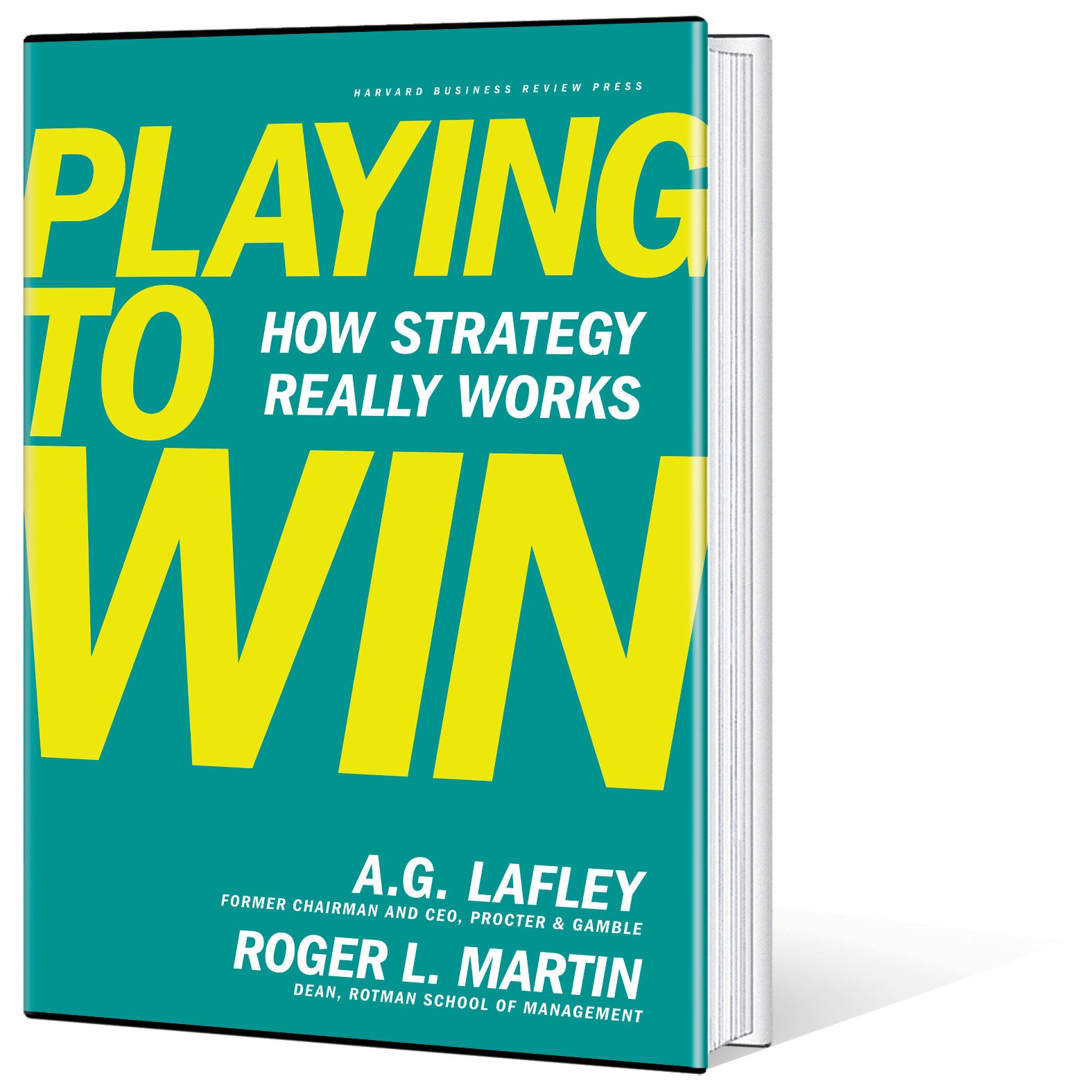
I do a lot of reading on a variety of topics, one of them strategy. And a lot of what I read is often very vague. It’s written to apply to any company, in any industry, of any size. This is how authors sell books, by appealing to a very wide demographic. This can be fine and I typically pull nuggets of value out of anything I read, even if limited. Some of what I read on strategy is clearly geared towards very large corporations. (It may be that their own sales strategy is to focus on MBA students ready to jump into the big time.) Again, all fine and good, but sometimes I don’t see enough value for the credit union industry that we support. But one book that I found valuable is the seminal, Playing to Win: How Strategy Really Works, by Roger Martin and A.G. Lafley. There are a number of great lessons and I recommend the full text, but what stuck with me most is their Six Strategy Traps to Avoid. Let’s review:

Six Strategy Traps to Avoid

  1. The Do-It-All Strategy
    Failing to make choices and making everything a priority.

  1. The Don Quixote Strategy
    Taking on the strongest competitor first. (“Walled Cities.”)

  1. The Waterloo Strategy
    Wars on multiple fronts with multiple competitors.

  1. The Something-For-Everyone Strategy
    Trying to capture all segments at once.

  1. The Dreams-That-Never-Come-True Strategy
    High level aspirations that never get translated into concrete how-to-play and how-to-win choices.

  1. The Program-Of-The-Month Strategy
    Generic industry strategies that all competitors are using.

I’ve seen credit unions that have tried all of these approaches over the years. What I see most commonly are number 1 (The Do-It-All Strategy) and number 4 (The Something-For-Everyone Strategy). And they ARE traps, making organizations feel like they are onto something to pursue when in fact they are just chasing a vague vision. And shockingly, there are a couple of shops out there that were more or less trapped in all six of these at once!

Review and Connect the Dots

Board members – review your strategy documents. Then think about the six traps above. Are you in one of them? Or in danger of falling into one? Do some critical analysis, as strategy documents can become very complex and have the appearance of a differentiation. Make sure that you can articulate your value proposition in plain language, and in a few sentences without too much jargon. If you’re not sure, bring it up in a board meeting, or as a discussion on your board portal software. You may need to start working through this now so that you have all of your strategy ducks in a row by the time the new budget is proposed next November.

And remember – it’s much easier to say “yes” to lines of business to pursue than it is to say “no.” But most credit unions can’t be all things to all people and must become excellent at one thing rather than mediocre at many. Which means that there are things, somewhat profitable angles, that need to be cut off. It’s a difficult decision but an approach that gives much more clarity for making decisions about resources, purpose and priorities.

© Copyright 2022 - Site design by Sprout Studio in Madison, WI