Posts

Your Strategy Isn’t Failing — Your Decision Velocity Is

By Kevin Smith

Credit union boards love to say they are “strategic.” They hold retreats. They commission market studies. They debate mission drift versus growth. They approve multi‑year strategic plans that are color‑coded, laminated, and confidently optimistic.

And yet, somehow, the credit union still feels stuck.

Products lag peers. Growth underperforms projections. Fintechs feel faster. Members behave differently than expected. Management keeps coming back with revisions, extensions, or “next‑phase” initiatives.

At some point, someone asks the uncomfortable question: Is our strategy wrong?

Usually, the answer is no.

More often, the problem isn’t strategy. It’s decision velocity.

What Decision Velocity Really Means (and Why Boards    Underestimate It)

Decision velocity is not about rushing. It’s about how quickly an organization:

  • Identifies a decision that actually matters
  • Gets it to the right level of authority
  • Makes a clear call
  • Moves on

Credit unions are generally thoughtful, risk‑aware, and consensus‑oriented. Those are strengths — until they aren’t.

In many boardrooms, strategic decisions move slowly not because they are complex, but because:

  • The decision is revisited multiple times “for comfort”
  • The board is unclear whether it is setting direction or approving execution
  • Risk conversations sprawl without resolution
  • Additional data is requested long after the signal is clear

The result is strategic drift disguised as prudence.

Why Slow Decisions Quietly Undermine Strategy

Markets do not pause for governance hygiene.

When decision velocity is low:

  • Opportunities age out before approval
  • First‑mover advantages disappear
  • Management defaults to incrementalism
  • Strategy becomes retrospective instead of directional

Boards then misdiagnose the problem. They conclude the strategy needs updating, refreshing, or re‑visioning — when what actually needs fixing is how long it takes to decide anything consequential.

A slow organization with a brilliant strategy will still lose to a faster one with a merely adequate plan.

The Hidden Governance Causes of Slow Decision Velocity

Credit union boards rarely intend to slow things down. But governance design often does the work for them.

Common culprits include:

  1. Blurred Decision Rights

Boards sometimes drift into execution decisions while avoiding strategic ones. Management waits for clarity. Everyone is polite. Time passes.

If the board cannot clearly answer, “Is this a direction decision or an implementation decision?” velocity will suffer.

  1. Risk Without Resolution

Risk discussions expand easily. Resolution does not.

Many boards are excellent at surfacing risk and less comfortable deciding how much risk is acceptable in pursuit of strategy. Without explicit risk boundaries, every decision feels unprecedented.

  1. Consensus as the Default Setting

Consensus feels cooperative. It is also slow.

Not every strategic decision requires unanimous comfort. When consensus becomes the goal rather than clarity, velocity drops — and accountability blurs.

  1. Board Calendar Mismatch

Strategy discussions that occur quarterly cannot support environments that change monthly. Boards then respond with special meetings, email votes, or delayed approvals — none of which are efficient substitutes for intentional governance design.

What Faster Boards Do Differently (Without Being Reckless)

High‑functioning boards do not move faster by caring less. They move faster by deciding better.

They:

  • Separate direction from execution
  • Define risk tolerance before decisions appear
  • Use consent or majority‑based decisions when appropriate
  • Escalate fewer items because authority is clearer

Most importantly, they recognize that speed itself is a strategic variable.

Questions Credit Union Boards Should Be Asking

If your strategy feels stalled, try these instead of another planning refresh:

  • How long does it take us to make a strategic decision once it reaches the board?
  • Which decisions do we routinely revisit — and why?
  • Where are we asking for more certainty than the environment can provide?
  • What decisions should management be empowered to make without us?

The answers are often more revealing than the strategy document.

The Real Strategic Advantage

In the next decade, credit unions will not out‑strategize competitors on paper.

They will out‑decide them in practice.

And the boards that learn to measure, manage, and intentionally improve decision velocity will discover something surprising:

Their strategy was never broken.

It was just waiting for permission to move.

Board Discussion Questions

  • Where do we see decisions consistently slowing down — and what is actually causing the delay?
  • Which strategic decisions have we revisited multiple times without materially new information?
  • Are we clear about which decisions belong to the board versus management?
  • Where might our desire for consensus be reducing accountability or speed?
  • If decision speed became a competitive advantage, what would we change first?

Strategic Scenario Planning in Uncertain Times: Because Nostradamus Retired Early

If you’re serving on a credit union board, congratulations. You’re a volunteer who willingly signed up to guide an institution in a world that looks like a badly written dystopian novel. Pandemics, inflation, talent shortages, tech disruption, AI deciding it wants your job—these are the plot twists. And, spoiler alert, you don’t get to close the book and walk away.

That’s why “strategic scenario planning” has become the new hot buzzword in board governance circles. Don’t worry: this isn’t another corporate fad, like “synergizing our holistic mindfulness KPIs.” Scenario planning is simply what happens when you admit you don’t actually know what the future holds (and yes, your strategic plan still pretends otherwise). It’s about creating structured “what ifs” so that when life happens—and it will—you’re not left blinking into the boardroom’s fluorescent lights saying, “Well, nobody could’ve seen this coming.”

Let’s break this down for the credit union world, with equal parts practicality and deadpan honesty.

Why Scenario Planning Exists (a.k.a. Reality Hurts)

Boards love certainty. You want to know the capital ratio target, the branch count, the CEO’s bonus structure. Certainty is neat and tidy. Unfortunately, the economy, your members, and the regulators didn’t read your neat little plan.

Consider recent history:

  • The pandemic. Everyone’s “five-year growth strategy” didn’t include “shutting down branches, scrambling for PPP loans, and buying webcams by the pallet.”
  • Inflation and interest rates. Those 30-year fixed mortgages you thought were your golden ticket? Suddenly members aren’t so eager to borrow when the rate is north of “ouch.”
  • Technology. Remember when mobile deposit was cutting-edge? Now your members want real-time everything. And if you don’t have it, they’ll gladly let a fintech handle their money while you argue about whether the minutes were approved correctly.

Scenario planning doesn’t pretend to predict the future—it just forces you to admit you’re not in control and to make a menu of reasonable responses. That humility is your new superpower.

The Basic Ingredients of Scenario Planning

Think of it like cooking, except the dish is “your credit union’s survival.”

  1. Pick the Critical Variables

What are the three to five forces most likely to mess with your strategic plan? For credit unions, these might include:

  • Interest rate volatility
  • Technology disruption (a.k.a. fintechs eating your lunch)
  • Talent shortages
  • Regulatory shifts (new compliance acronyms you haven’t even met yet)
  • Member behavior (spoiler: they’re fickle)
  1. Develop the “What If” Scenarios

These are not “wild fantasies” like winning the lottery. These are grounded, plausible futures. Example:

  • Best case: Rates stabilize, members return to borrowing, and your fintech investments pay off.
  • Middle case: Growth is flat, but manageable. You scrape by.
  • Worst case: Rates keep swinging, the regulator drops new capital requirements, and members defect because your mobile app looks like it was designed in 2009.
  1. Play Out the Implications

For each scenario, ask:

  • What happens to our balance sheet?
  • How does this impact member service?
  • Which sacred cows do we need to barbecue?
  1. Decide on Triggers

Scenario planning is only useful if you know when to pivot. Agree on what signs will tell you, “Yep, we’re in Scenario B now. Time to adjust.”

  1. Create Contingency Plays

Write down—in advance—the actions you’ll take. This is critical, because when things get ugly, boards tend to freeze. (It’s not personal; humans are just wired that way. Ask any deer in headlights.)

Example: Interest Rates Gone Wild

Let’s take an issue boards love to obsess over: interest rates.

  • Scenario A: Rates stabilize at moderate levels. Great, your ALM reports look less like a heart monitor. You can focus on growth.
  • Scenario B: Rates drop significantly. Good luck managing margin compression. Members refinance everything, your loan income shrinks, and you’re suddenly “creatively rethinking” your expense structure.
  • Scenario C: Rates climb higher than your blood pressure. Lending slows, members hoard deposits, and your branch staff gets daily questions like, “Why does my HELOC cost as much as a Tesla lease?”

With each scenario, you should have pre-agreed strategies. Otherwise, the conversation just goes in circles: “Should we cut expenses?” “Should we merge?” “Should we wait and see?” And by the time you’ve “waited and seen,” the opportunity window has closed.

Common Mistakes Boards Make in Scenario Planning

Let’s be honest: your board may already be doing scenario planning… poorly. Here’s how it usually goes off the rails:


  1. Confusing Wishful Thinking with Planning. Saying “the economy will probably bounce back by Q3” is not a plan. It’s optimism wearing a suit.
  2. Too Many Scenarios. Ten different futures? Forget it. You’ll drown in possibilities. Stick to three or four that actually matter.
  3. Treating it Like a One-Time Exercise. Scenario planning isn’t something you do once a year at the board retreat in a hotel conference room with stale muffins. It needs to be refreshed regularly.
  4. Failing to Link to Action. If your plan doesn’t identify specific triggers and responses, you’ve just written a choose-your-own-adventure novel.

Why This Matters for Credit Union Boards

So, here’s the punchline: scenario planning isn’t about accuracy, it’s about agility.

Your members don’t care that you “correctly” predicted the future. They care that you respond quickly and thoughtfully to whatever the world throws at them. If you’re nimble, you can turn uncertainty into opportunity:

  • Members anxious about rates? Provide education and reassurance before they defect to Google Bank.
  • Fintech competitors circling? Partner with them before they eat your lunch.
  • Staff stretched thin? Build contingency plans that prioritize member experience over vanity projects.

Boards that embrace scenario planning position themselves as strategic assets rather than ceremonial rubber stamps. And let’s face it: if you wanted to be ceremonial, you could’ve joined the local Rotary Club.

Final Thoughts: Embrace Your Inner Control Freak (But Be Flexible)

Credit union boards are not Nostradamus. You’re not here to predict the future with eerie accuracy. You’re here to prepare your institution so that no matter what happens, you don’t get blindsided into irrelevance.

So, do the unglamorous work:

  • Pick the big variables.
  • Sketch the futures.
  • Decide on triggers.
  • Practice making decisions in advance.

Because when the next big disruption arrives (and it will), you want your board to say, “We planned for this. Let’s execute.” Instead of, “Well, nobody could’ve seen this coming.”

And if nothing else, scenario planning at least makes board meetings more interesting than rehashing the treasurer’s report. Which, admit it, is a limbo-level, low bar.


Technology Shouldn’t Be  a Key Strategic Initiative Anymore*

Very few credit unions are using cutting edge technology as a differentiator in the market. Most are simply trying to keep up with the latest technological whistles and bells that turn into table stakes overnight. The approach to thinking about technology needs to pivot to a longer-term approach.

By Kevin Smith

That’s a very bold title for a blog post. It may be triggering for some. That’s okay. Note the asterisk behind it. If you’ve met me you know that my go-to answer to questions is the cop out, “it depends.” Well, this does depend too, but in rarer and rarer cases.

Tim Harrington and I spend a significant portion of our time in strategic planning sessions with credit union boards and leaders. It’s a fabulous opportunity for us. And I’ve noticed how many times the generic term “technology” shows up as a strategic priority in these sessions. It’s time to push back (gently) on this idea.

What’s Going On, in Two Scenes

Often when this comes up, it doesn’t take much scratching below the surface to find out that this means there are a few areas where the organization would like to get some of the latest cool features that some slick fintech or Apple have introduced that’

 s making the customer experience much faster or easier. So the thinking goes: installing gadget X will be a “strategy” to entice existing or new members to do Y.

Vintage bank teller counter circa late 1800s.

Sometimes when this comes up in the planning session, the digging reveals that there are a couple of technology features that are now commonplace that the credit union is lacking, such as fully online account opening or a digital loan application process. It’s here that the board and leadership recognize that without these features, they will be left behind. (An incredibly valid thought and concern!)

But playing catch-up is not a strategy.

I Thought We Were Done with the Word “Pivot”

It’s time to pivot away from thinking about technology features, whistles and bells, as a strategic approach. Would you consider having locks on the doors, cameras in the lobby, and multi-factor authentication as a strategy? Probably not. This is part of a security approach, a necessary security approach. It’s time to put our generic term of “technology” in the same category.

Few credit unions can be at the bleeding edge of tech-based products and services that are truly novel and strategic. At best we try to be fast followers. But this doesn’t mean that you pay any less attention to the technology needs of the organization. On the contrary. I’m suggesting that it needs to be woven into everything you do, into those things that actually qualify as Key Strategic Initiatives.

* Back to the Tricky Asterisk

Here’s the qualified, “it depends” moment. Some of my planning clients have heard this from me: If the organization is very behind in its technology offerings for member experience or in products and services, so much so that it can be considered an existential-ish crisis, then you may need to have “technology” needs on your Key Strategic Initiatives for a planning cycle. Ideally no more than one planning cycle, but that may not be realistic for some depending on how far behind they are. But the critical point is to try to get to a place, as quickly as possible, where you take technology off of your strategic initiatives for those existential reasons.

Change the thinking. Improve the outcomes.

Strategy Traps

The time to think about strategy is not limited to the fall right before the new year’s budget proposal. Strategy is an all-year discussion. Boards can (should) shift to this kind of thinking with conscious effort. It’s also critical to avoid the all-too-common strategy traps. Be thoughtful in how you differentiate.

By Kevin Smith


Strategic planning discussions?! Now!? In February?!

Ya sure. You betcha. (To quote my Norwegian/Wisconsin in-laws). The snow is falling outside and I’m putting off shoveling with this blog post. So, for some of you, those clues suggest it’s not the time of year to talk about strategic planning. But Tim and I want to push back on that. We want you to be thinking about strategic planning EVERY month. Not just in the fall right before the new budget proposal. So, let’s check in on a few things so that we can keep the strategic planning muscles in shape all year.

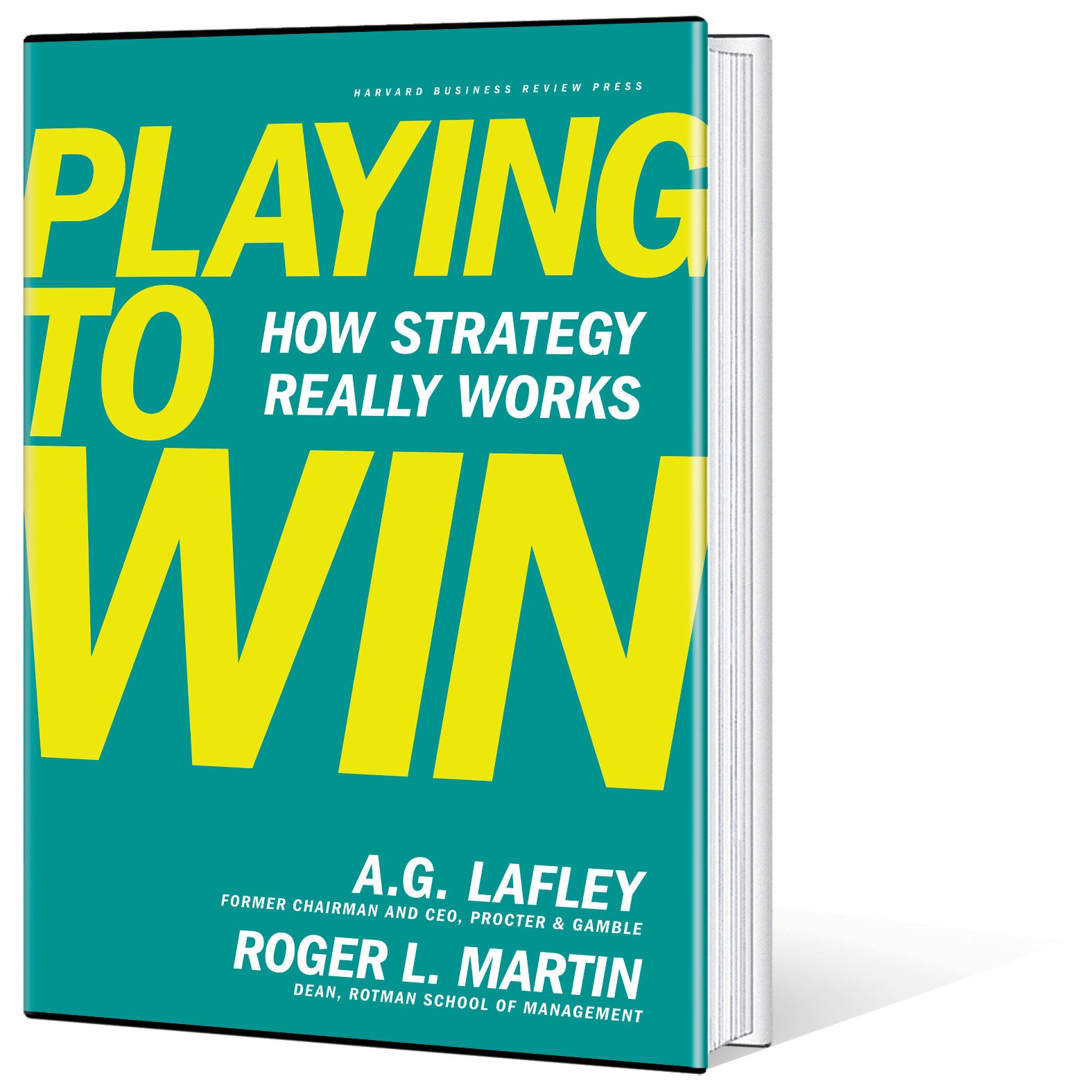
I do a lot of reading on a variety of topics, one of them strategy. And a lot of what I read is often very vague. It’s written to apply to any company, in any industry, of any size. This is how authors sell books, by appealing to a very wide demographic. This can be fine and I typically pull nuggets of value out of anything I read, even if limited. Some of what I read on strategy is clearly geared towards very large corporations. (It may be that their own sales strategy is to focus on MBA students ready to jump into the big time.) Again, all fine and good, but sometimes I don’t see enough value for the credit union industry that we support. But one book that I found valuable is the seminal, Playing to Win: How Strategy Really Works, by Roger Martin and A.G. Lafley. There are a number of great lessons and I recommend the full text, but what stuck with me most is their Six Strategy Traps to Avoid. Let’s review:

Six Strategy Traps to Avoid

  1. The Do-It-All Strategy
    Failing to make choices and making everything a priority.

  1. The Don Quixote Strategy
    Taking on the strongest competitor first. (“Walled Cities.”)

  1. The Waterloo Strategy
    Wars on multiple fronts with multiple competitors.

  1. The Something-For-Everyone Strategy
    Trying to capture all segments at once.

  1. The Dreams-That-Never-Come-True Strategy
    High level aspirations that never get translated into concrete how-to-play and how-to-win choices.

  1. The Program-Of-The-Month Strategy
    Generic industry strategies that all competitors are using.

I’ve seen credit unions that have tried all of these approaches over the years. What I see most commonly are number 1 (The Do-It-All Strategy) and number 4 (The Something-For-Everyone Strategy). And they ARE traps, making organizations feel like they are onto something to pursue when in fact they are just chasing a vague vision. And shockingly, there are a couple of shops out there that were more or less trapped in all six of these at once!

Review and Connect the Dots

Board members – review your strategy documents. Then think about the six traps above. Are you in one of them? Or in danger of falling into one? Do some critical analysis, as strategy documents can become very complex and have the appearance of a differentiation. Make sure that you can articulate your value proposition in plain language, and in a few sentences without too much jargon. If you’re not sure, bring it up in a board meeting, or as a discussion on your board portal software. You may need to start working through this now so that you have all of your strategy ducks in a row by the time the new budget is proposed next November.

And remember – it’s much easier to say “yes” to lines of business to pursue than it is to say “no.” But most credit unions can’t be all things to all people and must become excellent at one thing rather than mediocre at many. Which means that there are things, somewhat profitable angles, that need to be cut off. It’s a difficult decision but an approach that gives much more clarity for making decisions about resources, purpose and priorities.

© Copyright 2022 - Site design by Sprout Studio in Madison, WI