
Posts

Scenario Planning Is Dead. Long Live Strategic Posture

by That One Consultant You Hired and Then Ignored

Somewhere in your credit union, there is a binder. It may be physical — a three-ring monument to optimism, with color-coded tabs labeled Best Case, Worst Case, and Most Likely. Or it may live on a shared drive that nobody has opened since the last board retreat, tucked between the updated org chart and a strategic planning template from 2019.
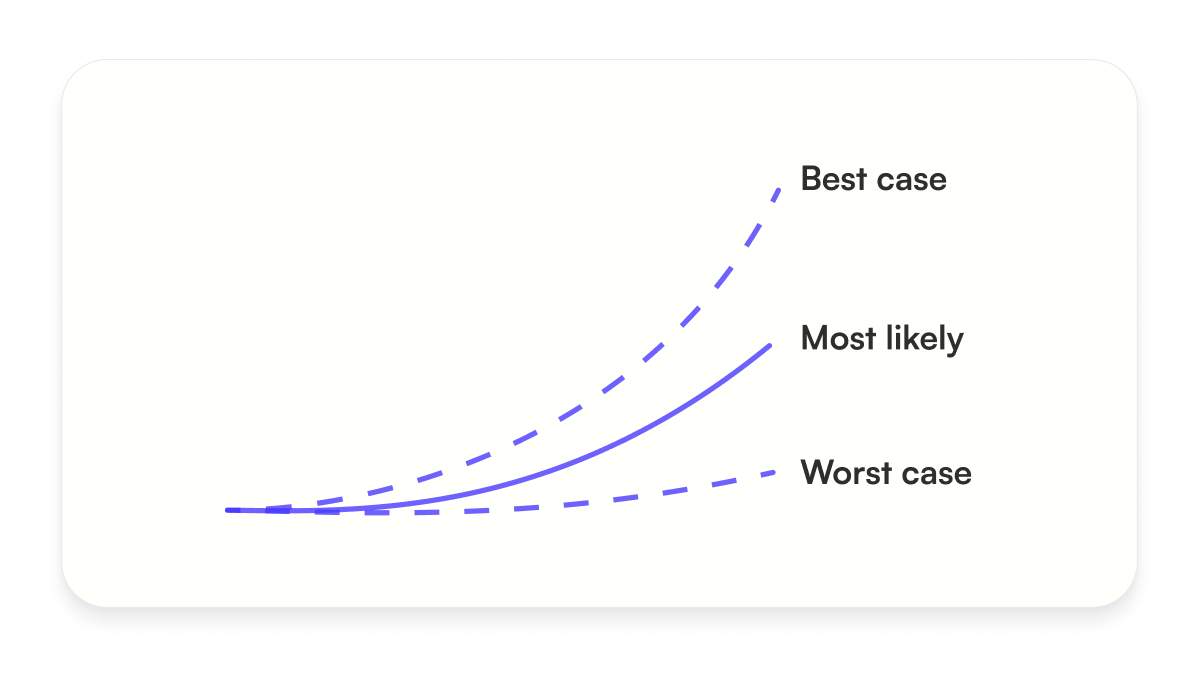
This binder represents somewhere between forty and four hundred hours of staff time, depending on how many consultants were involved. It was presented with great confidence. It was approved with great ceremony. It is now, with all due respect to everyone in that room, largely fictional.

Not because your team didn’t work hard. Because the future stopped cooperating.

The Quiet Failure of the Scenario Binder

Traditional scenario planning rests on a few reasonable assumptions: that the future will arrive in one of a limited number of identifiable shapes, that cause and effect will behave more or less as expected, and that there will be enough time between “uh oh” and “what do we do now” to actually consult the plan.

These assumptions are increasingly adorable.

Interest rates do not wait for your quarterly review cycle. Technology adoption accelerates in ways that make last year’s roadmap look like a historical document. Member expectations shift before you finish the survey designed to measure them. Regulatory guidance evolves mid-implementation, with the cheerful indifference of a weather system that didn’t read your forecast.

The result is that many credit union boards are doing enormous amounts of planning work to produce documents that are obsolete before the lamination dries. This is not a planning problem. It is a planning philosophy problem. And the fix isn’t to plan harder. It’s to plan differently.

The Question You’re Asking Wrong

Most boards in strategic planning mode are trying to answer one central question:

What will happen?

It is a reasonable question. It is also, at this particular moment in economic and technological history, almost impossible to answer with any useful precision. And yet boards keep asking it, commissioning elaborate answers to it, and then updating those answers every quarter when reality declines to match the projection.

Here’s the better question:

How do we intend to behave no matter what happens?

That is not a forecast. That is a posture. And it turns out posture is considerably more durable than prediction.

What Strategic Posture Actually Means (Without the Buzzwords)

Strategic posture is not a new framework, a software platform, or something that requires a two-day offsite and a facilitator with strong opinions about sticky notes (of which, I’m one!). It is a set of explicit, pre-agreed stances about how your credit union will behave in the face of uncertainty.

Posture answers the questions that scenarios keep deferring:

  • Are we a fast follower or an early mover?
  • Will we partner, build, or wait?
  • How much margin compression are we willing to absorb in service of member experience?
  • What will we protect even when the pressure to cut is loudest?

These questions don’t require predicting the future. They require self-knowledge. And self-knowledge, unlike a five-year forecast, does not expire.

A credit union with clear posture might say, for example:

We will prioritize member experience even when it pressures short-term margins.

That sentence is useful in a rate environment that goes up. It is useful in a rate environment that goes down. It is useful when a fintech competitor enters the market and when one quietly fails. Posture travels. Scenarios don’t.

Why Boards Are Uniquely Suited to Set Posture (and Rarely Do)

Here is a governance irony worth sitting with: boards are actually better positioned to define posture than to validate forecasts, and yet most boards spend most of their strategic time on forecasts.

Forecasts require operational depth that management has and boards generally don’t. A board that tries to critically evaluate a five-year projection model is largely dependent on the people who built it to explain why it’s credible. This is not oversight. This is nodding.

Posture, on the other hand, is exactly the kind of judgment boards are built for. Risk tolerance. Long-term values. Institutional identity. The question of what kind of credit union we want to be is not an operational question. It is a governance question. It belongs in the boardroom.

And when boards get posture right, something useful happens downstream: management stops needing permission for every decision that falls outside the scenario binder. When the CEO knows that the board’s posture is “invest ahead of demand in digital capabilities,” she does not need to schedule a special board meeting every time a digital investment opportunity appears. The posture is the guidance. The trust is built in.

When posture is vague, every decision becomes a board-level event. Which explains a lot about certain board agendas we could mention but professionally won’t.

How to Actually Do This

This is not about throwing out the strategic plan. It is about rebalancing where the board’s attention goes during strategy discussions. Specifically:

  1. Spend less time refining forecasts, more time clarifying intent. The forecast will be wrong. The intent will still be yours. Invest accordingly.
  2. Write the posture down. Unwritten posture is just a vibe. Vibes don’t survive leadership transitions, and they don’t guide management during a crisis at 11pm on a Tuesday. Explicit posture does.
  3. Test decisions against posture, not just scenarios. Before approving the next major initiative, ask: does this reflect who we said we are? That question is faster, more honest, and considerably less likely to produce a forty-slide deck in response.
  4. Revisit posture annually — not assumptions quarterly. Posture should be stable enough to anchor decisions and flexible enough to evolve when the institution genuinely changes. It is not a living document in the sense of “we update it every time someone gets nervous.”

Questions Worth Asking at Your Next Strategy Session

If your board is ready to try this, here are five questions that will either produce clarity or a very productive argument. Both outcomes are useful.

  • How would we describe our current strategic posture — and is it actually explicit, or is it just implied and quietly disagreed upon?
  • Where are we relying on forecasts that we know, privately, are unlikely to hold?
  • What assumptions do we keep revisiting every quarter instead of making a decision about once?
  • How confident is management in making decisions without seeking board approval — and is that level of confidence appropriate or alarming?
  • If conditions changed abruptly tomorrow, would our posture guide us forward — or send us back to the binder?

Final Thoughts: The Binder Had a Good Run

Scenario planning is not worthless. It is, in the right doses, genuinely useful for stress-testing assumptions and preparing management for specific contingencies. Nobody is suggesting you throw the binder into the recycling bin with great ceremony, however satisfying that might feel.

But as the primary output of board-level strategic work, it has reached its limits. The world is producing disruptions faster than planning cycles can absorb them, and boards that spend their strategic energy predicting which disruption comes next are playing a game they will keep losing.

Organizations with clear posture move faster, argue less, and adapt better. They are not always right. But they are almost never paralyzed. And in a world where the future has stopped arriving on schedule, coherence may be the most underrated competitive advantage available.

The problem was never that you didn’t plan enough. It’s that you planned for a future that had other ideas. Time to plan for yourself instead.

The 600-Dollar Question: When Board Oversight Becomes Death by Interrogation

There is a moment that happens in credit union boardrooms across America. It is the moment when a well-meaning director leans forward, adjusts their reading glasses, and asks the CEO: “Why did we spend six hundred dollars on those new break room chairs?”

by That One Consultant You Hired and Then Ignored 

The CEO—who has spent the past week negotiating a $40 million loan participation, managing a core system migration, and quietly talking the compliance officer off a ledge—takes a breath. A long breath. The kind that has a legal team and a therapist on speed dial baked into it.

This is not governance. This is archaeology. And unfortunately, it is extremely common.

The Oversight Paradox

Here’s the dirty secret about board oversight: done poorly, it doesn’t protect the organization. It quietly suffocates it.

Oversight exists for excellent reasons. Boards are the stewards of member assets, the guardrails of institutional integrity, and the last line of defense against the kind of strategic disasters that end up as case studies in graduate school. Good oversight is invaluable. Necessary. Even heroic, on a good day.

But there is a version of oversight that has drifted—slowly, with the best of intentions—from “strategic accountability” into “interrogating the invoice for printer toner.” And that version is doing real damage.

The paradox is this: boards that ask too many small questions are usually avoiding the big ones. It’s easier to audit the break room chairs than to have a difficult conversation about whether the five-year strategic plan reflects anything resembling current market reality.

*To dig in further on why we do this, revisit our blog on “Bikeshedding and Boards.” It’s our brain’s fault.

A Field Guide to Interrogation Styles

For identification purposes, here are the most common species of oversight-gone-wrong, observed in their natural habitat:

  • The Archaeologist. Asks detailed questions about decisions made six to eighteen months ago. Loves phrases like “Wait, when did we approve this?” Finds comfort in relitigating the past, possibly because the past is safer than the present.


  • The Micromanager in Disguise. Frames operational questions as governance concerns. “I’m just asking” is their signature opener. Recently wanted to know why the CEO chose FedEx over UPS for a document shipment. (True story. Or close enough to be true.)

  • The Second-Guesser. Waits until a strategic decision has been made, implemented, and is showing early results—then raises concerns about it. Thrives in hindsight. Has strong opinions about the road not taken, mostly because they don’t have to drive it.


  • The Gotcha Questioner. Doesn’t actually want an answer. Wants to demonstrate that they spotted something everyone else missed. Questions arrive pre-loaded with implied conclusions. “Isn’t it true that…” is a preamble, not a question.

None of these directors are villains. They are, almost without exception, people who care deeply about the credit union and are expressing that care in the wrong direction. The problem is that their questions consume the room’s oxygen—time that could be spent on strategy, member impact, or the seven other agenda items patiently waiting their turn.

What This Actually Costs

Let’s talk about the real price tag, because it’s considerably higher than six hundred dollars.

When boards slide into interrogation mode, several things happen. First, the CEO and senior leadership start preparing for board meetings the way defendants prepare for depositions. Every decision generates a paper trail not because it’s strategically useful, but because someone will ask. Defensive management is expensive, time-consuming, and demoralizing. It is also, in a tragic irony, the least strategic thing a leadership team can do.

Second, risk appetite shrinks. If every initiative is subject to retroactive cross-examination, smart leaders learn to propose only what’s safe. Bold moves get quietly shelved not because they’re wrong, but because they’re hard to defend under fluorescent lights to an audience with a prepared list of skeptical questions.

Third—and this one is genuinely painful to watch—good CEOs leave. Not dramatically, not all at once, but gradually. They stop bringing their best ideas to the board because the board has trained them not to. Eventually they bring their ideas somewhere else. Often, that’s a different credit union.

The Question Behind the Questions

Here is something worth sitting with: when a board asks too many operational questions, it is almost never really about the operations.

It’s about trust. Or the absence of it.

When a board genuinely trusts its CEO—when there is transparency, consistent communication, and a shared strategic framework—operational minutiae stops being interesting. The chairs cost six hundred dollars? Fine. The CEO made a call, the call was reasonable, let’s talk about the loan-to-share ratio.

But when trust is thin, everything becomes a data point. Every expense is a clue. Every decision is potential evidence of something. The interrogation is really a trust deficit wearing a governance costume.

If your board is regularly diving into operational weeds, the most useful question isn’t “Why did we buy those chairs?” It’s “Why don’t we trust the person we hired to make that call?” That conversation is harder. It is also the only one that actually fixes anything.

What Good Oversight Actually Looks Like

Good oversight asks hard questions—at the right altitude. It is the difference between “Why this vendor?” and “Does our vendor management policy reflect current risk exposure?” One is a transaction. The other is governance.

A few principles worth adopting:

  1. Ask about policy, not purchases. Your job is to ensure the right frameworks exist—not to audit individual decisions made within those frameworks. If the CEO has spending authority up to $25,000, don’t ask about the $600 chairs. Ask whether the spending policy itself is still fit for purpose.
  2. Interrogate strategy, not symptoms. The second-guessing instinct usually points to a real concern buried under an unhelpful question. Surface the real concern. “I’m worried our operating expenses are drifting” is a governance conversation. “Why does the coffee machine cost this much?” is not.
  3. Distinguish accountability from hostility. Accountability means holding leadership to agreed-upon standards, with transparency and fairness. Hostility means treating every board meeting like a deposition. One builds a stronger organization. The other builds a stronger résumé for the CEO’s recruiter.
  4. Build the trust infrastructure. Regular CEO evaluations, transparent dashboards, clear strategic KPIs, and an open-door culture for candid conversation—these reduce the need for interrogation because they replace anxiety with information.

Closing Thoughts: The Right Questions Are Hard

There is a version of your board that asks fewer questions and governs more effectively. That board has done the hard work of building trust, aligning on strategy, and distinguishing its role from management’s. Its questions are rarer, sharper, and more consequential. Its CEO sleeps better. Its members are better served.

And yes, it probably has nicer break room chairs. Because someone made a reasonable call and nobody needed to schedule a follow-up to discuss it.

The goal of governance isn’t to catch the CEO doing something wrong. It’s to make sure the institution does something right.

Those are very different jobs. It’s time more boards knew which one they showed up to do.

Your Strategy Isn’t Failing — Your Decision Velocity Is

By Kevin Smith

Credit union boards love to say they are “strategic.” They hold retreats. They commission market studies. They debate mission drift versus growth. They approve multi‑year strategic plans that are color‑coded, laminated, and confidently optimistic.

And yet, somehow, the credit union still feels stuck.

Products lag peers. Growth underperforms projections. Fintechs feel faster. Members behave differently than expected. Management keeps coming back with revisions, extensions, or “next‑phase” initiatives.

At some point, someone asks the uncomfortable question: Is our strategy wrong?

Usually, the answer is no.

More often, the problem isn’t strategy. It’s decision velocity.

What Decision Velocity Really Means (and Why Boards    Underestimate It)

Decision velocity is not about rushing. It’s about how quickly an organization:

  • Identifies a decision that actually matters
  • Gets it to the right level of authority
  • Makes a clear call
  • Moves on

Credit unions are generally thoughtful, risk‑aware, and consensus‑oriented. Those are strengths — until they aren’t.

In many boardrooms, strategic decisions move slowly not because they are complex, but because:

  • The decision is revisited multiple times “for comfort”
  • The board is unclear whether it is setting direction or approving execution
  • Risk conversations sprawl without resolution
  • Additional data is requested long after the signal is clear

The result is strategic drift disguised as prudence.

Why Slow Decisions Quietly Undermine Strategy

Markets do not pause for governance hygiene.

When decision velocity is low:

  • Opportunities age out before approval
  • First‑mover advantages disappear
  • Management defaults to incrementalism
  • Strategy becomes retrospective instead of directional

Boards then misdiagnose the problem. They conclude the strategy needs updating, refreshing, or re‑visioning — when what actually needs fixing is how long it takes to decide anything consequential.

A slow organization with a brilliant strategy will still lose to a faster one with a merely adequate plan.

The Hidden Governance Causes of Slow Decision Velocity

Credit union boards rarely intend to slow things down. But governance design often does the work for them.

Common culprits include:

  1. Blurred Decision Rights

Boards sometimes drift into execution decisions while avoiding strategic ones. Management waits for clarity. Everyone is polite. Time passes.

If the board cannot clearly answer, “Is this a direction decision or an implementation decision?” velocity will suffer.

  1. Risk Without Resolution

Risk discussions expand easily. Resolution does not.

Many boards are excellent at surfacing risk and less comfortable deciding how much risk is acceptable in pursuit of strategy. Without explicit risk boundaries, every decision feels unprecedented.

  1. Consensus as the Default Setting

Consensus feels cooperative. It is also slow.

Not every strategic decision requires unanimous comfort. When consensus becomes the goal rather than clarity, velocity drops — and accountability blurs.

  1. Board Calendar Mismatch

Strategy discussions that occur quarterly cannot support environments that change monthly. Boards then respond with special meetings, email votes, or delayed approvals — none of which are efficient substitutes for intentional governance design.

What Faster Boards Do Differently (Without Being Reckless)

High‑functioning boards do not move faster by caring less. They move faster by deciding better.

They:

  • Separate direction from execution
  • Define risk tolerance before decisions appear
  • Use consent or majority‑based decisions when appropriate
  • Escalate fewer items because authority is clearer

Most importantly, they recognize that speed itself is a strategic variable.

Questions Credit Union Boards Should Be Asking

If your strategy feels stalled, try these instead of another planning refresh:

  • How long does it take us to make a strategic decision once it reaches the board?
  • Which decisions do we routinely revisit — and why?
  • Where are we asking for more certainty than the environment can provide?
  • What decisions should management be empowered to make without us?

The answers are often more revealing than the strategy document.

The Real Strategic Advantage

In the next decade, credit unions will not out‑strategize competitors on paper.

They will out‑decide them in practice.

And the boards that learn to measure, manage, and intentionally improve decision velocity will discover something surprising:

Their strategy was never broken.

It was just waiting for permission to move.

Board Discussion Questions

  • Where do we see decisions consistently slowing down — and what is actually causing the delay?
  • Which strategic decisions have we revisited multiple times without materially new information?
  • Are we clear about which decisions belong to the board versus management?
  • Where might our desire for consensus be reducing accountability or speed?
  • If decision speed became a competitive advantage, what would we change first?

Your Real Strategy Is Risk Avoidance (Even If You Won’t Admit It)

By Kevin Smith

If you asked your credit union board to describe its strategy, you’d likely hear words like growth, innovation, member-centric, or future-ready. No one ever says, “Our strategy is to avoid risk at all costs and hope nothing bad happens on our watch.”

And yet.

If we’re being honest—and governance works better when we are—many credit union strategies quietly default to risk avoidance. Not because boards are lazy or disengaged, but because avoiding risk feels responsible. It feels safe. It feels like the kind of thing a regulator would nod approvingly at while flipping through your exam report.

Unfortunately, risk avoidance is still a strategy. It’s just rarely the one boards think they’re executing.

The Strategy You Get When You Don’t Choose One

Risk avoidance rarely shows up as a formal board resolution. It emerges slowly, almost politely.

It sounds like:

  • “Let’s wait and see how this plays out.”
  • “Other credit unions are doing it—let’s see how it goes for them first.”
  • “We don’t want to get ahead of the regulators.”
  • “This feels like a distraction from our core business.”

Individually, these statements seem reasonable. Collectively, they form a strategy of inertia. Over time, the credit union becomes very good at not doing things. No failed pilots. No uncomfortable conversations. No bold moves that might require explaining later.

The board doesn’t explicitly decide to avoid risk. It just consistently chooses the least controversial option available. And eventually, that is the strategy.

Remember how Tim Harrington puts this –  “There’s risk foolishness, and risk intelligence.” There’s a way to do this intelligently while taking on the risk in your approach, rather than avoiding it altogether. 

When “Being Careful” Becomes the Business Model

Credit union boards are, by design, conservative. You are fiduciaries of member assets. You’re not supposed to gamble. That’s good.

The problem arises when caution stops being a filter and becomes the destination.

Boards that lean too far into risk avoidance often share a few traits:

  • They spend far more time discussing what could go wrong than what could go right.
  • Innovation is something management “brings back later with more detail.”
  • Strategic discussions end with no decisions, but lots of appreciation for the conversation.
  • The phrase “that’s not how we’ve done things” is treated as wisdom rather than a warning sign.

Ironically, these boards often believe they are being strategic simply because they are thoughtful. But thoughtfulness without action is just well-documented hesitation.

The Risk No One Puts on the Heat Map

Here’s the uncomfortable truth: boards are very good at tracking certain kinds of risk—credit risk, liquidity risk, compliance risk. There are dashboards. Color-coded charts. Reassuring acronyms.

But there’s one risk that rarely gets equal treatment: the risk of doing nothing.

What is the risk of:

  • Not modernizing your delivery model while member expectations evolve?
  • Not addressing declining relevance with younger members?
  • Not investing in talent because it feels expensive?
  • Not exploring partnerships because they feel unfamiliar?

These risks don’t trigger examiner findings. They don’t show up in next quarter’s numbers. They unfold slowly, quietly, and with remarkable patience.

By the time they’re obvious, the board often says, “This came out of nowhere.” It didn’t. It just wasn’t on the agenda.

Regulation as a Convenient Excuse

Let’s talk about the regulator in the room.

Yes, credit unions are heavily regulated. Yes, compliance matters. And yes, no one wants to be the board that explains a preventable problem to an examiner.

But sometimes “the regulator won’t like it” becomes a catch-all excuse for avoiding difficult strategic decisions—especially when the real issue is uncertainty, not prohibition.

Many boards don’t ask, “Is this allowed?” They ask, “Could this possibly create discomfort?” Those are very different questions.

Regulators generally expect boards to manage risk, not eliminate it entirely. When boards confuse compliance with strategy, they unintentionally shrink the organization’s future to the size of its last exam.

That’s not safety. That’s stagnation with good intentions.

Innovation Theater and Other Safe Performances

Some boards respond to this tension by engaging in what might be called innovation theater.

There are presentations. There are task forces. There are discussions about “keeping an eye on trends.” Sometimes there’s even a pilot project that never quite scales.

This creates the appearance of forward thinking without the inconvenience of real change. Everyone can feel progressive without actually taking responsibility for outcomes.

Innovation theater is comforting. Real innovation is messy, uncertain, and occasionally unsuccessful. One of these aligns better with risk-averse cultures than the other.

What Risk-Tolerant Strategy Actually Looks Like

To be clear, this is not an argument for reckless decision-making. It’s an argument for intentional risk-taking.

Boards that align risk and strategy tend to do a few things differently:

  • They explicitly define their risk appetite in plain language, not just policy documents.
  • They evaluate opportunities alongside the risk of inaction.
  • They expect management to bring forward options, not fully risk-neutralized proposals.
  • They treat learning from failure as part of governance, not a breach of trust.

Most importantly, they recognize that avoiding all risk is itself a high-risk position in a changing financial services landscape.

The Question Boards Rarely Ask (But Should)

Here’s a question worth adding to every strategic discussion:

“What are we choosing not to do—and what does that choice cost us?”

This forces the board to acknowledge that declining an opportunity isn’t neutral. It’s directional. It shapes the credit union just as much as a bold initiative would.

When boards fail to ask this question, they quietly accept a future that looks a lot like the past. Which feels comfortable. Right up until it doesn’t.

Final Thought: Honesty Is a Strategic Asset

Risk avoidance isn’t a moral failing. It’s human. It’s understandable. And in moderation, it’s responsible.

But when boards refuse to acknowledge that fear and caution are driving strategic outcomes, they lose the ability to course-correct.

The most effective boards aren’t fearless. They’re honest—about tradeoffs, about uncertainty, and about the fact that every strategy involves risk, including the strategy of standing still.

Because at the end of the day, “We played it safe” is rarely the legacy boards intend to leave behind.

Organic Growth Isn’t Dead: A Memo for Boards Who Think Mergers Are the Only Muscle Left

Remember when your credit union’s growth strategy didn’t involve acquiring the one across town and calling it “synergy”? Those were quaint times — like rotary phones, free toasters, and when “branch transformation” meant adding a fake ficus and a new carpet pattern.

Today, we’re told growth equals mergers. “Economies of scale!” they say. “Efficiency!” they say. And indeed, there’s nothing like doubling your size overnight to make the chart at the annual meeting look like a hockey stick. But here’s the uncomfortable truth: a merger may make you bigger, but it doesn’t always make you better.

And sometimes it doesn’t even make you… you.

By TEAM Resources

The Myth of Mergers as Growth

Let’s be clear: mergers have their place. When done thoughtfully, they can combine complementary strengths, fill product gaps, and offer long-term sustainability. When done reflexively, they can resemble two tired swimmers clinging to each other in a riptide.

Many credit union boards have quietly accepted the idea that “organic growth” — growing through relevance, innovation, and member engagement — is no longer realistic. They assume the game is now about consolidation and survival. After all, “everybody’s doing it.”

This mindset, while understandable, is also a slow surrender of the cooperative DNA that made the movement powerful in the first place. It replaces local connection with administrative convenience. It trades story for scale. And while scale can buy a lot of things, authentic member loyalty isn’t one of them.

When Bigger Isn’t Better

If we were brutally honest, some credit union mergers are like two people getting married mainly because they both happen to dislike dating.

Yes, the combined institution gets a larger balance sheet, a few operational efficiencies, and an expanded field of membership that looks great in a press release. But culture? Mission clarity? Member intimacy? Those things often end up as “non-core assets” quietly written off in the post-merger accounting.

A common board refrain goes something like this:

“We’re not getting enough new members. We can’t keep up with technology. Our growth has stalled. Maybe a merger is our best strategic option.”

Translation:

“We’re not sure how to adapt, so let’s find someone else who’s also not sure how to adapt and see if we can confuse the regulators into thinking it’s progress.”

The Case for Organic Growth (Yes, Still a Thing)

Organic growth isn’t flashy. It doesn’t make headlines. It requires patience, curiosity, and the courage to look uncomfortably inwards. But it is the only kind of growth that builds lasting strength — because it’s rooted in actually being valuable to your members.

Here’s what that looks like in real life:

  1. Deepening Existing Relationships

Your best source of growth is usually the people who already like you. Radical concept, right? Yet many boards are so focused on attracting new members that they overlook the gold mine of existing members who would do more business if someone just asked.

How well do you know your members’ needs today — not when they joined 15 years ago? Are you still talking to them about car loans while they’re quietly launching small businesses or planning retirement?

The most successful credit unions in 2026 will be those that treat data like empathy fuel — not marketing ammo.

  1. Rediscovering Niche Markets

Some of the strongest growth stories in the credit union system right now are small or mid-sized institutions that found their “tribe.” They serve gig workers, healthcare staff, teachers, or specific communities — and they know them inside out.

It turns out that serving a niche exceptionally well beats serving everyone marginally. That’s not just a marketing slogan; it’s a governance philosophy. A board that knows its niche can make strategic bets with confidence instead of wandering through market trends like tourists without a map.

  1. Partnership as Leverage, Not Rescue

    Levers (simple machine)

Partnership doesn’t have to mean merger. It can mean shared back-office systems, fintech collaborations, or joint community projects that expand reach without erasing identity.

The future of cooperative finance might look less like “big fish eats small fish” and more like “schools of fish swimming in coordinated patterns.” (And yes, some of those fish will have better mobile apps than others.)

  1. Relevance Before Reach

Before you try to grow, be worth growing. Members today — especially younger ones — care about whether their financial institution reflects their values.

If your credit union’s last community post was a check presentation in 2018, you might have a relevance problem. Organic growth flows naturally from authenticity: people join and stay where they feel understood, not where they’re sent a quarterly postcard.

Boards: The Gatekeepers of Growth Strategy

Here’s the tricky part — this isn’t a CEO problem alone. Boards often unconsciously reinforce merger dependency. Why? Because mergers feel strategic — they check the “action taken” box.

But true strategic leadership asks harder questions:

  • What do we offer that members can’t get elsewhere?
  • How are we measuring member engagement and satisfaction, not just balance sheet growth?
  • If we weren’t allowed to merge for five years, how would we grow?

That last one is the killer question. It forces creativity, relevance, and discipline. It also reveals whether your credit union has a living strategy or just a growth habit.

When Identity Becomes a Footnote

Mergers change more than logos. They change purpose. When your credit union merges, what happens to your origin story? Your local legacy? The member who remembers when the teller knew their dog’s name?

Those intangible assets are part of your capital base, too — just not in a Call Report cell. And once they’re gone, they’re gone.

This doesn’t mean every merger is bad. Some are necessary and even noble. But the problem arises when boards stop asking the “why” and focus only on the “how fast.”

Because once your identity is gone, growth becomes just arithmetic. And arithmetic is not a mission.

Signs Your Board Might Have Merger Tunnel Vision

  • Every strategic discussion eventually ends with “maybe we should merge.”
  • Your marketing budget is smaller than your merger legal fees.
  • You call it “scale” but secretly mean “retirement plan for the CEO.”
  • The board hasn’t discussed organic member growth in three fiscal years.

If any of these sound familiar, it’s time for a governance intervention.

The Organic Growth Mindset

Reclaiming organic growth doesn’t require a radical overhaul — just a shift in perspective:

  • Growth isn’t a transaction. It’s a relationship.
  • Bigger isn’t safer if it makes you forget who you are.
  • Strategy means deciding what not to chase.
  • Relevance is renewable — if you pay attention.

Boards that embrace this mindset will not only survive but thrive, because they’ll be steering institutions that members actually want to belong to.

Final Thought: The Return of Cooperative Courage

The credit union movement was born from local people solving local problems — together. No one merged their way into that success.

So before your next “strategic partnership exploration committee” meeting, ask yourselves: Are we still in the business of cooperation, or have we quietly pivoted to consolidation?

Because organic growth isn’t dead. It’s just waiting for its board to remember what it looks like.

And spoiler alert: it looks a lot like courage.


The Hidden Cost of Board Inaction: What Happens When Strategic Gaps Go Unaddressed

You’ve probably heard the saying, “Sometimes the best action is no action.” It’s a comforting thought—especially for anyone who’s ever survived a particularly long board meeting. But at the credit union board level, that phrase should come with a warning label:

“Prolonged inaction may cause strategic decay, leadership paralysis, and an allergic reaction to innovation.”

By Kevin Smith

It’s time to talk about the hidden costs of doing nothing. Not the obvious “we missed an opportunity” kind of nothing, but the board-level governance variety—where everyone nods thoughtfully, agrees to “revisit it next quarter,” and quietly moves on to more comfortable topics, like parking lot repairs or the staff picnic.

Because in the real world, those “small delays” accumulate. They stack up like unread board packets, until one day you realize the credit union is three strategic cycles behind, your best staff have migrated elsewhere, and your members are wondering why their “friendly local credit union” still makes them fill out paper forms.

Let’s take a sober, slightly sarcastic look at what happens when boards let strategic gaps sit around too long—like leftovers in the breakroom fridge that no one wants to claim.

  1. The Opportunity Gap: Blink and It’s Gone

Inaction has a cost, even if it doesn’t show up on the balance sheet. Every time your board delays a strategic decision—whether it’s a new branch, a technology investment, or a leadership development initiative—someone else takes the opening.

Banks, fintechs, and the occasional “nontraditional competitor” (translation: everyone from PayPal to a grocery store app) are all out there moving fast. They don’t have to wait for the next board meeting to authorize a new product pilot.

When your credit union spends nine months “evaluating digital transformation options”, the fintechs spend that same time transforming digitally.

The hidden cost here is lost momentum—and once it’s gone, you can’t just vote it back into existence.


  1. The Leadership Gap: When “Succession Planning” Means Hoping Someone Sticks Around

Many boards have a touching faith in longevity. “Our CEO’s been here 25 years,” someone says proudly. “She’s not going anywhere.”

Of course, one day, she does go somewhere—like retirement, or an offer from an organization that seems slightly more future-oriented.

Cue the awkward silence.

The leadership gap is one of the most expensive forms of board inaction, because it doesn’t look like a problem—until it suddenly is.

Failing to plan for leadership transition isn’t just about losing one person. It’s about losing organizational knowledge, stability, and the ability to think beyond this year’s budget. It’s about scrambling to hire an interim CEO and realizing you don’t have anyone ready internally because “we were waiting to see how things developed.”

Spoiler alert: things developed.

  1. The Cultural Gap: When Nobody Wants to Be the First to Say Something

In some boardrooms, the most dangerous phrase is “Let’s not rush into this.” It sounds prudent. Mature. Governance-y. But sometimes, it’s just code for “I don’t want to start an argument.”

Board culture is often the silent killer of progress.

A culture that avoids hard conversations creates a slow leak in effectiveness. The risk discussions become shallow. Strategic plans become vague. Everyone becomes fluent in a language of polite noncommittal phrases:

  • “We’ll keep that on our radar.”
  • “It’s definitely something to think about.”
  • “Let’s revisit that once we have more information.”

This linguistic tap dance lets everyone feel productive while achieving precisely nothing.

Over time, the cost is organizational drift—a slow, polite slide away from relevance.

  1. The Risk Gap: When Complacency Looks Like Stability

Boards are supposed to be the guardians of risk management. But sometimes, that responsibility morphs into a collective game of “Don’t rock the boat.”

The problem is, boats that never move eventually sink from lack of maintenance.

When boards avoid taking calculated risks—because the last one made people nervous, or because “things seem fine”—they stop managing risk and start preserving comfort.

The hidden cost?

  • Missed chances for growth.
  • No innovation pipeline.
  • A staff culture that learns the safest way to survive is to stop suggesting new ideas.

By the time the external environment forces a change—like new technology requirements, regulatory shifts, or competitive disruptions—the credit union’s risk tolerance has atrophied.

It’s a bit like going to the gym for the first time in five years and realizing that “strategic agility” requires muscle you no longer have.

  1. The Accountability Gap: When Everyone’s Responsible, Nobody Is

Ah yes, the classic governance paradox: the board is collectively responsible for oversight, which means that individually… well, nobody actually owns anything.

This is how important follow-ups fall through the cracks. Strategic goals blur into “action items,” and “action items” into “discussion points.”

Eventually, someone notices that half of last year’s priorities are still listed as “ongoing.”

Boards that fail to assign accountability not only lose track of execution—they erode trust between governance and management. Staff start to assume that board requests don’t really matter because they’re never revisited. The board, meanwhile, assumes management is ignoring direction.

Everyone’s frustrated, but no one remembers where the breakdown started. (Hint: it started when no one took notes after the motion to “revisit this next time.”)

  1. The Member Gap: The Ultimate Cost of Doing Nothing

Every governance failure ultimately lands on one doorstep: the member’s.

Members don’t see the internal debates, the deferred decisions, or the noble intentions. They just see whether their credit union is responsive, accessible, and relevant.

When strategic gaps linger, members pay the price—in slower service, outdated technology, and products that no longer fit their needs.

And once they decide to move their business elsewhere, no amount of nostalgic community branding will bring them back.

  1. How to Close the Gaps (Without Losing Your Sense of Humor)

So, what’s a well-meaning board to do when faced with the creeping symptoms of inaction? Fortunately, the cure doesn’t require heroics—just a few practical habits:

1. Put expiration dates on decisions.

If something hasn’t moved in three meetings, either act on it or kill it. (Yes, you can always resurrect it later.)

2. Create visible accountability.

Assign names, not groups. “The Governance Committee will handle it” is code for “No one will.”

3. Build in external pressure.

Schedule outside reviews, peer benchmarking, or facilitator check-ins. Nothing motivates like knowing someone else will ask how it went.

4. Celebrate movement, not perfection.

A small step forward beats a perfect plan stuck in limbo.

5. Keep humor on the agenda.

It’s easier to confront tough truths when you can laugh about them.

Final Thought

Boards don’t fail because they’re careless. They fail because it’s surprisingly easy to confuse discussion with progress, and caution with wisdom.

But the hidden costs of inaction are real. They compound quietly, like interest on a loan you forgot you took out.

So at your next meeting, when someone says, “Let’s not rush into this,” pause and ask:

“Are we being prudent—or are we just procrastinating in a very professional way?”

If you can answer that question honestly, you’re already ahead of the game.

Strategic Scenario Planning in Uncertain Times: Because Nostradamus Retired Early

If you’re serving on a credit union board, congratulations. You’re a volunteer who willingly signed up to guide an institution in a world that looks like a badly written dystopian novel. Pandemics, inflation, talent shortages, tech disruption, AI deciding it wants your job—these are the plot twists. And, spoiler alert, you don’t get to close the book and walk away.

That’s why “strategic scenario planning” has become the new hot buzzword in board governance circles. Don’t worry: this isn’t another corporate fad, like “synergizing our holistic mindfulness KPIs.” Scenario planning is simply what happens when you admit you don’t actually know what the future holds (and yes, your strategic plan still pretends otherwise). It’s about creating structured “what ifs” so that when life happens—and it will—you’re not left blinking into the boardroom’s fluorescent lights saying, “Well, nobody could’ve seen this coming.”

Let’s break this down for the credit union world, with equal parts practicality and deadpan honesty.

Why Scenario Planning Exists (a.k.a. Reality Hurts)

Boards love certainty. You want to know the capital ratio target, the branch count, the CEO’s bonus structure. Certainty is neat and tidy. Unfortunately, the economy, your members, and the regulators didn’t read your neat little plan.

Consider recent history:

  • The pandemic. Everyone’s “five-year growth strategy” didn’t include “shutting down branches, scrambling for PPP loans, and buying webcams by the pallet.”
  • Inflation and interest rates. Those 30-year fixed mortgages you thought were your golden ticket? Suddenly members aren’t so eager to borrow when the rate is north of “ouch.”
  • Technology. Remember when mobile deposit was cutting-edge? Now your members want real-time everything. And if you don’t have it, they’ll gladly let a fintech handle their money while you argue about whether the minutes were approved correctly.

Scenario planning doesn’t pretend to predict the future—it just forces you to admit you’re not in control and to make a menu of reasonable responses. That humility is your new superpower.

The Basic Ingredients of Scenario Planning

Think of it like cooking, except the dish is “your credit union’s survival.”

  1. Pick the Critical Variables

What are the three to five forces most likely to mess with your strategic plan? For credit unions, these might include:

  • Interest rate volatility
  • Technology disruption (a.k.a. fintechs eating your lunch)
  • Talent shortages
  • Regulatory shifts (new compliance acronyms you haven’t even met yet)
  • Member behavior (spoiler: they’re fickle)
  1. Develop the “What If” Scenarios

These are not “wild fantasies” like winning the lottery. These are grounded, plausible futures. Example:

  • Best case: Rates stabilize, members return to borrowing, and your fintech investments pay off.
  • Middle case: Growth is flat, but manageable. You scrape by.
  • Worst case: Rates keep swinging, the regulator drops new capital requirements, and members defect because your mobile app looks like it was designed in 2009.
  1. Play Out the Implications

For each scenario, ask:

  • What happens to our balance sheet?
  • How does this impact member service?
  • Which sacred cows do we need to barbecue?
  1. Decide on Triggers

Scenario planning is only useful if you know when to pivot. Agree on what signs will tell you, “Yep, we’re in Scenario B now. Time to adjust.”

  1. Create Contingency Plays

Write down—in advance—the actions you’ll take. This is critical, because when things get ugly, boards tend to freeze. (It’s not personal; humans are just wired that way. Ask any deer in headlights.)

Example: Interest Rates Gone Wild

Let’s take an issue boards love to obsess over: interest rates.

  • Scenario A: Rates stabilize at moderate levels. Great, your ALM reports look less like a heart monitor. You can focus on growth.
  • Scenario B: Rates drop significantly. Good luck managing margin compression. Members refinance everything, your loan income shrinks, and you’re suddenly “creatively rethinking” your expense structure.
  • Scenario C: Rates climb higher than your blood pressure. Lending slows, members hoard deposits, and your branch staff gets daily questions like, “Why does my HELOC cost as much as a Tesla lease?”

With each scenario, you should have pre-agreed strategies. Otherwise, the conversation just goes in circles: “Should we cut expenses?” “Should we merge?” “Should we wait and see?” And by the time you’ve “waited and seen,” the opportunity window has closed.

Common Mistakes Boards Make in Scenario Planning

Let’s be honest: your board may already be doing scenario planning… poorly. Here’s how it usually goes off the rails:


  1. Confusing Wishful Thinking with Planning. Saying “the economy will probably bounce back by Q3” is not a plan. It’s optimism wearing a suit.
  2. Too Many Scenarios. Ten different futures? Forget it. You’ll drown in possibilities. Stick to three or four that actually matter.
  3. Treating it Like a One-Time Exercise. Scenario planning isn’t something you do once a year at the board retreat in a hotel conference room with stale muffins. It needs to be refreshed regularly.
  4. Failing to Link to Action. If your plan doesn’t identify specific triggers and responses, you’ve just written a choose-your-own-adventure novel.

Why This Matters for Credit Union Boards

So, here’s the punchline: scenario planning isn’t about accuracy, it’s about agility.

Your members don’t care that you “correctly” predicted the future. They care that you respond quickly and thoughtfully to whatever the world throws at them. If you’re nimble, you can turn uncertainty into opportunity:

  • Members anxious about rates? Provide education and reassurance before they defect to Google Bank.
  • Fintech competitors circling? Partner with them before they eat your lunch.
  • Staff stretched thin? Build contingency plans that prioritize member experience over vanity projects.

Boards that embrace scenario planning position themselves as strategic assets rather than ceremonial rubber stamps. And let’s face it: if you wanted to be ceremonial, you could’ve joined the local Rotary Club.

Final Thoughts: Embrace Your Inner Control Freak (But Be Flexible)

Credit union boards are not Nostradamus. You’re not here to predict the future with eerie accuracy. You’re here to prepare your institution so that no matter what happens, you don’t get blindsided into irrelevance.

So, do the unglamorous work:

  • Pick the big variables.
  • Sketch the futures.
  • Decide on triggers.
  • Practice making decisions in advance.

Because when the next big disruption arrives (and it will), you want your board to say, “We planned for this. Let’s execute.” Instead of, “Well, nobody could’ve seen this coming.”

And if nothing else, scenario planning at least makes board meetings more interesting than rehashing the treasurer’s report. Which, admit it, is a limbo-level, low bar.


Too Much of a Good Thing: The Hidden Perils of Capital Hoarding

 by That One Consultant You Hired and Then Ignored

If you’re a board member at a credit union, chances are you’ve said it. Maybe in a hushed boardroom voice, maybe with great conviction over lunch, maybe carved into stone tablets. It goes something like this:

“You can never have too much capital.”

Cue the heavenly choir and the flutter of regulatory examiners descending on clouds of GAAP. Capital, after all, is safety. Capital is security. Capital is your warm, fuzzy blanket on a cold night of economic uncertainty.

Except—and please, clutch your pearls tightly here—you can have too much of it. Yes, really. And when you do, it’s not just inefficient. It’s strategically dangerous.

Let’s talk about it, shall we?


Capital: From Safety Net to Strategic Straitjacket

First, let’s get the obvious out of the way. Capital is good. Regulatory capital is essential. You need it. The NCUA says so, and if the NCUA says jump, most credit unions are halfway to orbit before they ask how high.

But capital is a tool, not a trophy. When your capital ratio drifts into the teens—13%, 14%, 15% and beyond—you’re not just safe. You’re overdressed for the occasion.

Imagine showing up to a beach party in full medieval armor. That’s what it’s like running a 15% capital ratio in today’s credit union market. Impressive? Sure. But also a bit ridiculous, and not particularly helpful when it’s time to swim—or compete, innovate, or grow.


The Law of Diminishing Return on Paranoia

Many boards live by a simple mantra: More capital equals more safety. It’s neat. It’s easy. It’s… mathematically adorable.

But here’s the truth: every extra dollar of capital that sits unleveraged on your balance sheet is a member dollar not working, not producing value, not returning benefit.

Imagine telling your members, “We’ve taken your money, and we’re keeping it locked away in a vault, doing nothing, because someday the sky might fall. And if it doesn’t? Well, at least we felt warm and fuzzy.”

Not exactly the value proposition credit unions are known for.

And if your board’s idea of risk management is “hoard capital like it’s 2008 and Ben Bernanke just texted ‘brace yourself,’” then you’ve essentially traded strategic growth for a very expensive security blanket.


The Zombie Apocalypse That Never Comes

Let’s address the Doomsday scenario. Boards often justify massive capital buffers by invoking a theoretical calamity so devastating, it would make Mad Max look like a family picnic.

“We need to be ready for the worst-case scenario.”

Great. Let’s play that out.

Say a 500-basis-point rate shock, a recession, a Martian invasion, and a Nickelback reunion tour all hit at once. Terrifying? Yes. But unless your balance sheet is made entirely of subprime balloon loans and vibes, the odds of such a cataclysm wiping out your 10% capital buffer and then some are vanishingly low.

And even if it did, your regulator is unlikely to high-five you for sitting on a 15% buffer when 12% would have sufficed and the other 3% could have been used to actually serve members. You don’t get a trophy for hoarding potential.


“But the Regulators Like It!”

Sure. And your dentist likes it when you floss twice a day. Doesn’t mean it’s a viable identity.

Yes, regulators appreciate strong capital. But they also value operational effectiveness, loan growth, membership value, and risk-informed decision-making. They don’t want to see you building capital castles while the market passes you by.

Running a credit union solely to appease your examiner is like designing a car for your mechanic. Sure, they’ll love the engine access, but no one’s going to buy the thing.


Strategic Growth: Now Hiring Capital

Let’s talk opportunity cost.

Every dollar that sits in capital at a 14% ratio (when 10% would suffice) is a dollar not deployed into strategic initiatives. That’s a new loan program not launched, a branch not modernized, a digital upgrade not implemented, or a member segment not served.

You are, quite literally, overcapitalized and underutilized. That’s not caution—it’s stagnation dressed up as virtue.

And CEOs? If your board is holding you hostage with ultra-conservative capital policies, congratulations: you’ve been promoted to Chief Preservation Officer. Your job is to sit on a pile of money and politely decline to use it.

Spoiler alert: That’s not strategy. That’s surrender.


The PR Problem You Didn’t Know You Had

There’s also a branding problem with excessive capital. If word gets out (and it does—NCUA Call Reports are public, remember?), members, vendors, and yes, even regulators may start wondering:

Why is this credit union sitting on 15% capital when their peers are doing just fine with 10%?

Is it inefficiency? Fear? A pathological aversion to lending?

Whatever the case, the story isn’t flattering.


So, What Should a Board Do?

Ah, finally, solutions. You were getting anxious, weren’t you?

  1. Set a Capital Target, Not a Capital Shrine.

    Create a realistic, risk-informed capital target based on actual scenario modeling. Not vibes. Not trauma from the Great Recession.

  2. Regularly Reassess the Capital Buffer.

    If you’ve had 300+ basis points of excess capital for five years running, that’s not a buffer—that’s a moat. And you’re the dragon asleep in the middle.

  3. Tie Capital Deployment to Strategy.

    Capital should be the fuel for your mission, not a museum piece. Use it. Lend it. Invest it. Innovate with it.

  4. Educate the Board—Yes, Again.

    A board stuck in the “more is better” loop may need a refresher on how capital, risk, and growth actually interact. Spoiler alert: hoarding isn’t growth.


Closing Thoughts from Your Favorite Snarky Consultant

Let’s be clear: no one’s asking you to gamble with your capital. But don’t confuse risk management with strategic paralysis. The real danger isn’t the next economic downturn—it’s the slow erosion of relevance while your capital ratio quietly creeps toward 16% and your members quietly wonder why nothing ever changes.

So be brave. Be strategic. Be willing to sweat a little. And for the love of all that is cooperative and not-for-profit, stop worshipping at the altar of excessive capital.

Because in the end, the goal isn’t to die the richest credit union in the graveyard.

It’s to live boldly enough that your members actually notice.

Plans from Which We Deviate: The Joys of Strategic Planning for Credit Unions

By Kevin Smith

“Plans are useless, but planning is indispensable.” – Dwight D. Eisenhower.

Dwight D. Eisenhower

Dwight D. Eisenhower

Dwight D. Eisenhower, a man who knew a thing or two about logistics, once made this insightful remark about planning. Since his time, the philosophy of planning has evolved, giving us NASA’s Dr. Laura Gallaher’s version: “Plans from which we deviate.” If that isn’t the most honest and depressingly accurate description of strategic planning, I don’t know what is.

Dr. Laura Gallaher

Dr. Laura Gallaher

For credit unions, strategic planning is not just a fun corporate retreat where executives pretend to be excited about PowerPoint slides. It’s an annual exercise in educated guesswork, wishful thinking, and attempting to predict the future with the accuracy of a weather forecast in the middle of hurricane season. The real value of planning, as Dr. Gallaher puts it, is not the document itself, but the process of thinking through how to react when reality inevitably ignores our best-laid plans.

The Art of Predicting the Unpredictable

Strategic planning is often presented as a structured and rational process, but let’s be real: it’s an exercise in educated fortune-telling. Credit unions operate in a world where economic shifts, regulatory changes, technological advancements, and the ever-evolving expectations of members make long-term planning feel like building a sandcastle at high tide.

Consider the many external factors credit unions must navigate:

  • Economic downturns: Because nothing says “stable financial future” like an unpredictable market.

  • Regulatory changes: Just when you think you understand the rules, a new compliance update appears like an unwanted sequel to a bad movie.

  • Technology disruptions: Fintech startups and AI-powered everything are here to remind you that whatever system you’re using is probably already outdated.

  • Member expectations: People want convenience, security, personal service, and cutting-edge tech—all at the same time, immediately, and preferably for free.

Given these moving targets, it’s no wonder that strategic plans are more useful as artifacts of optimism rather than actionable roadmaps.

The Illusion of Control

One of the great myths of strategic planning is that it gives leaders a sense of control. You can map out all the goals, objectives, and key performance indicators you want, but at some point, reality will step in and say, “That’s cute.”

It’s much like plotting a cross-country road trip with detailed stops and scheduled breaks, only to find that half the roads are under construction, your GPS reroutes you through a cow pasture, and your car develops an unexplained rattling noise somewhere in Kansas.

At best, a strategic plan gives you a general sense of direction—like a compass in a storm. It helps credit unions establish priorities, allocate resources, and identify potential risks. At worst, it’s a highly polished document that will be revisited in a year just to confirm how wrong everyone was.

The Real Benefit: Learning to Adapt

Dr. Gallaher’s take—that planning is about preparing for deviation rather than rigidly following an agenda—is probably the most useful way to think about strategic planning. The real benefit isn’t in the plan itself but in the discussions, debates, and critical thinking that happen during the process.

Strategic planning forces leadership teams to ask important questions:

  • What will we do if interest rates rise/fall/stay the same but somehow still ruin everything?

  • How do we attract younger members who think a credit union is either a dance club or a medieval trade guild?

  • What happens if our core banking system decides to take an unscheduled vacation?

  • How do we balance personalized member service with the fact that nobody wants to talk to a human anymore?

These conversations are where the real value lies. When (not if) the unexpected happens, a credit union that has engaged in rigorous planning is better equipped to pivot rather than panic.

Embracing the Chaos

So, if strategic planning is essentially about preparing to abandon the plan, does that mean we should stop doing it? Of course not. That would be like saying you shouldn’t wear a seatbelt because you might never get into an accident.

The process of strategic planning fosters collaboration, highlights blind spots, and builds a culture of adaptability. It helps leaders anticipate challenges, even if they can’t predict the exact form those challenges will take.

Credit unions that embrace this reality—those that treat their strategic plans as living, flexible frameworks rather than sacred texts—are the ones that thrive. The key is to plan with the understanding that deviations are not failures; they’re just part of the journey.

Planning as a Necessary Illusion

Eisenhower was right—plans may be useless, but planning is indispensable. And if strategic planning for credit unions has taught us anything, it’s that success lies not in rigid adherence to a document but in the ability to adapt, respond, and move forward even when the best-laid plans go sideways.

So, go ahead and create that beautiful, color-coded, data-backed strategic plan. Just don’t be surprised when reality turns it into a “Plan from which we deviate.” After all, that’s the plan all along.

Navigating VUCA: A Survival Guide for Credit Union Board Members

The whole world is facing the need to deal with increasing VUCA. Volatility. Uncertainty. Complexity. Ambiguity. Credit unions and their boards included. Directors must flex this muscle and practice dealing with all of these to bring their organizations into a future where they can continue to make a difference in their members’ lives.

By Kevin Smith, a full set of Encyclopedia Britannica and the full interwebs.

Being a credit union board member in today’s financial landscape is a bit like being the captain of a ship caught in a hurricane – except the hurricane never ends, the maps are outdated, and the crew occasionally votes to change course mid-storm. Welcome to the world of VUCA: Volatility, Uncertainty, Complexity, and Ambiguity.

If you were hoping for a stable, predictable environment where the hardest decision is approving the annual picnic budget, you may want to reconsider your life choices. But since you’re already here, let’s talk about how to steer your credit union through the financial chaos with grace, strategy, and perhaps a little gallows humor.

VOLATILITY: When Things Change Faster Than Your Meeting Agenda

Volatility in the financial services industry is as predictable as an overambitious budget proposal – inevitable and usually requiring last-minute adjustments. Interest rates swing, inflation rises and falls, fintech disruptors appear out of nowhere, and regulators seem to enjoy changing the rules just when you’ve finally understood the old ones.

How to deal with it:

1. Stay agile, not reactive. If you jump at every headline about the economy, you’ll exhaust yourself and confuse everyone around you. Instead, focus on long-term trends and build flexibility into your strategic plans.

2. Think in scenarios. When planning, don’t assume a single future. Have multiple game plans: “If rates go up, we do X. If they go down, we do Y. If the regulators invent a new acronym that changes everything, we call an emergency board meeting.”

3. Make peace with volatility. Just like how no one really knows what the stock market will do tomorrow, no one can promise you a smooth ride in the credit union world. Accept it. Adapt. And maybe invest in stress balls for your next meeting.

UNCERTAINTY: Otherwise Known as “Why Is This Happening?”

The financial world has a habit of delivering surprises. Maybe it’s a global event that upends the economy (again), or a new competitor that suddenly offers zero-fee everything. Maybe it’s just that nobody knows what younger generations actually want from a financial institution anymore.

Uncertainty is like being blindfolded and asked to hit a pinata except the pinata is moving, and you’re not sure it even exists.

How to deal with it:

1. Gather intelligence. No, you don’t need a spy network (although that would be fun). Just make sure your board is regularly reviewing industry reports, talking to experts, and keeping an eye on economic indicators. The more informed you are, the better your guesses will be.

2. Invest in adaptability. Uncertainty isn’t going away, so structure your credit union to handle surprises. Can you quickly shift resources if a new opportunity arises? Can your leadership team pivot if regulations change? If not, start building that muscle now.

3. Communicate with confidence (even if you’re guessing). Members and employees don’t want to hear, “We have no idea what’s happening.” Instead, try, “We are carefully evaluating multiple scenarios and will act in our members’ best interests.” It sounds better and prevents unnecessary panic.

COMPLEXITY: Where Everything is Connected, and Nothing is Simple

Remember when running a credit union just meant collecting deposits, making loans, and sending out newsletters with smiling stock photos? Those were the good old days.

Now, complexity rules. Regulatory requirements are labyrinthine, cybersecurity threats lurk in every corner, and technological advancements demand constant upgrades. And let’s not forget the delightful complexity of member expectations, which range from “I want personalized financial advice” to “Why can’t you just be an app on my phone?”

How to deal with it:

1. Don’t try to be an expert in everything. You’re a board member, not an omniscient being. Surround yourself with specialists – whether it’s compliance experts, cybersecurity professionals, or fintech advisors. Your job is to ask the right questions, not to have all the answers.

2. Simplify where you can. Complexity is inevitable, but unnecessary complexity is a choice. Look for ways to streamline governance, decision-making, and member services. If your processes resemble a Rube Goldberg machine, it might be time for a redesign.

3. Leverage technology wisely. Yes, AI, automation, and digital banking are important. No, you don’t need to invest in every shiny new tool that crosses your path. Be strategic – what actually benefits your members and makes operations more efficient? If the answer isn’t clear, it’s probably not worth the investment.

AMBIGUITY: The Art of Making Decisions with Half the Information

Ambiguity is what happens when the rules aren’t clear, the outcomes aren’t predictable, and no one agrees on what’s happening in the first place. It’s like trying to play chess when half the pieces are missing and the other half are actually checkers.

Maybe the government is discussing new regulations, but nobody knows what the final version will look like. Maybe your competitors are testing a new product, but it’s unclear if it’s a brilliant innovation or a financial disaster in the making.

How to deal with it:

1. Get comfortable with discomfort. If you need perfect clarity before making a decision, you’ll never make one. Ambiguity is part of leadership. Accept that some decisions will be made with incomplete data.

2. Lean on principles, not just policies. Policies tell you what to do when the situation is clear. Principles guide you when it’s not. If your board has a strong mission and clear values, those can be your North Star when ambiguity clouds everything else.

3. Be willing to course-correct. No decision is final. If new information comes in that changes the situation, don’t cling to a bad choice just to save face. Adapt, adjust, and move forward.

Final Thoughts: Thriving in VUCA

If you’ve made it this far without resigning from your board seat in frustration, congratulations. The truth is, VUCA isn’t going anywhere. Volatility, uncertainty, complexity, and ambiguity are just the price of doing business in modern financial services.

But here’s the good news: credit unions are uniquely positioned to handle this chaos. Unlike big banks driven by shareholder profits, credit unions are built on community, trust, and adaptability. If you can embrace change, make informed decisions, and stay focused on your members, you’ll not only survive in a VUCA world – you might even thrive.

And if all else fails, there’s always coffee. Lots and lots of coffee. If you’ve met me, you know that this is my go-to strategy. :-) 

© Copyright 2022 - Site design by Sprout Studio in Madison, WI