
Plans from Which We Deviate: The Joys of Strategic Planning for Credit Unions
By Kevin Smith
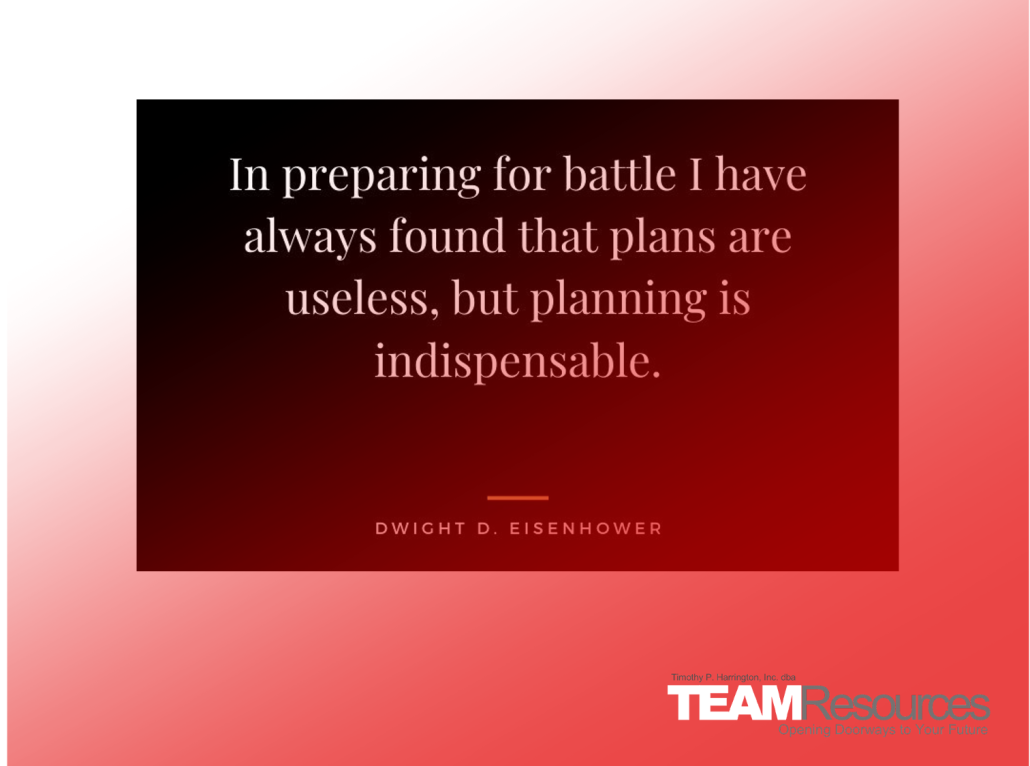
“Plans are useless, but planning is indispensable.” – Dwight D. Eisenhower.

Dwight D. Eisenhower, a man who knew a thing or two about logistics, once made this insightful remark about planning. Since his time, the philosophy of planning has evolved, giving us NASA’s Dr. Laura Gallaher’s version: “Plans from which we deviate.” If that isn’t the most honest and depressingly accurate description of strategic planning, I don’t know what is.

For credit unions, strategic planning is not just a fun corporate retreat where executives pretend to be excited about PowerPoint slides. It’s an annual exercise in educated guesswork, wishful thinking, and attempting to predict the future with the accuracy of a weather forecast in the middle of hurricane season. The real value of planning, as Dr. Gallaher puts it, is not the document itself, but the process of thinking through how to react when reality inevitably ignores our best-laid plans.
The Art of Predicting the Unpredictable
Strategic planning is often presented as a structured and rational process, but let’s be real: it’s an exercise in educated fortune-telling. Credit unions operate in a world where economic shifts, regulatory changes, technological advancements, and the ever-evolving expectations of members make long-term planning feel like building a sandcastle at high tide.
 Consider the many external factors credit unions must navigate:
Economic downturns: Because nothing says “stable financial future” like an unpredictable market.
Regulatory changes: Just when you think you understand the rules, a new compliance update appears like an unwanted sequel to a bad movie.
Technology disruptions: Fintech startups and AI-powered everything are here to remind you that whatever system you’re using is probably already outdated.
Member expectations: People want convenience, security, personal service, and cutting-edge tech—all at the same time, immediately, and preferably for free.
Given these moving targets, it’s no wonder that strategic plans are more useful as artifacts of optimism rather than actionable roadmaps.
The Illusion of Control
One of the great myths of strategic planning is that it gives leaders a sense of control. You can map out all the goals, objectives, and key performance indicators you want, but at some point, reality will step in and say, “That’s cute.”
It’s much like plotting a cross-country road trip with detailed stops and scheduled breaks, only to find that half the roads are under construction, your GPS reroutes you through a cow pasture, and your car develops an unexplained rattling noise somewhere in Kansas.
At best, a strategic plan gives you a general sense of direction—like a compass in a storm. It helps credit unions establish priorities, allocate resources, and identify potential risks. At worst, it’s a highly polished document that will be revisited in a year just to confirm how wrong everyone was.
The Real Benefit: Learning to Adapt
Dr. Gallaher’s take—that planning is about preparing for deviation rather than rigidly following an agenda—is probably the most useful way to think about strategic planning. The real benefit isn’t in the plan itself but in the discussions, debates, and critical thinking that happen during the process.
Strategic planning forces leadership teams to ask important questions:
What will we do if interest rates rise/fall/stay the same but somehow still ruin everything?
How do we attract younger members who think a credit union is either a dance club or a medieval trade guild?
What happens if our core banking system decides to take an unscheduled vacation?
How do we balance personalized member service with the fact that nobody wants to talk to a human anymore?
These conversations are where the real value lies. When (not if) the unexpected happens, a credit union that has engaged in rigorous planning is better equipped to pivot rather than panic.
Embracing the Chaos
So, if strategic planning is essentially about preparing to abandon the plan, does that mean we should stop doing it? Of course not. That would be like saying you shouldn’t wear a seatbelt because you might never get into an accident.
The process of strategic planning fosters collaboration, highlights blind spots, and builds a culture of adaptability. It helps leaders anticipate challenges, even if they can’t predict the exact form those challenges will take.
Credit unions that embrace this reality—those that treat their strategic plans as living, flexible frameworks rather than sacred texts—are the ones that thrive. The key is to plan with the understanding that deviations are not failures; they’re just part of the journey.
Planning as a Necessary Illusion

Eisenhower was right—plans may be useless, but planning is indispensable. And if strategic planning for credit unions has taught us anything, it’s that success lies not in rigid adherence to a document but in the ability to adapt, respond, and move forward even when the best-laid plans go sideways.
So, go ahead and create that beautiful, color-coded, data-backed strategic plan. Just don’t be surprised when reality turns it into a “Plan from which we deviate.” After all, that’s the plan all along.




thanks for info.
Are there more information regarding about this topic for us to research for? Thanks!